

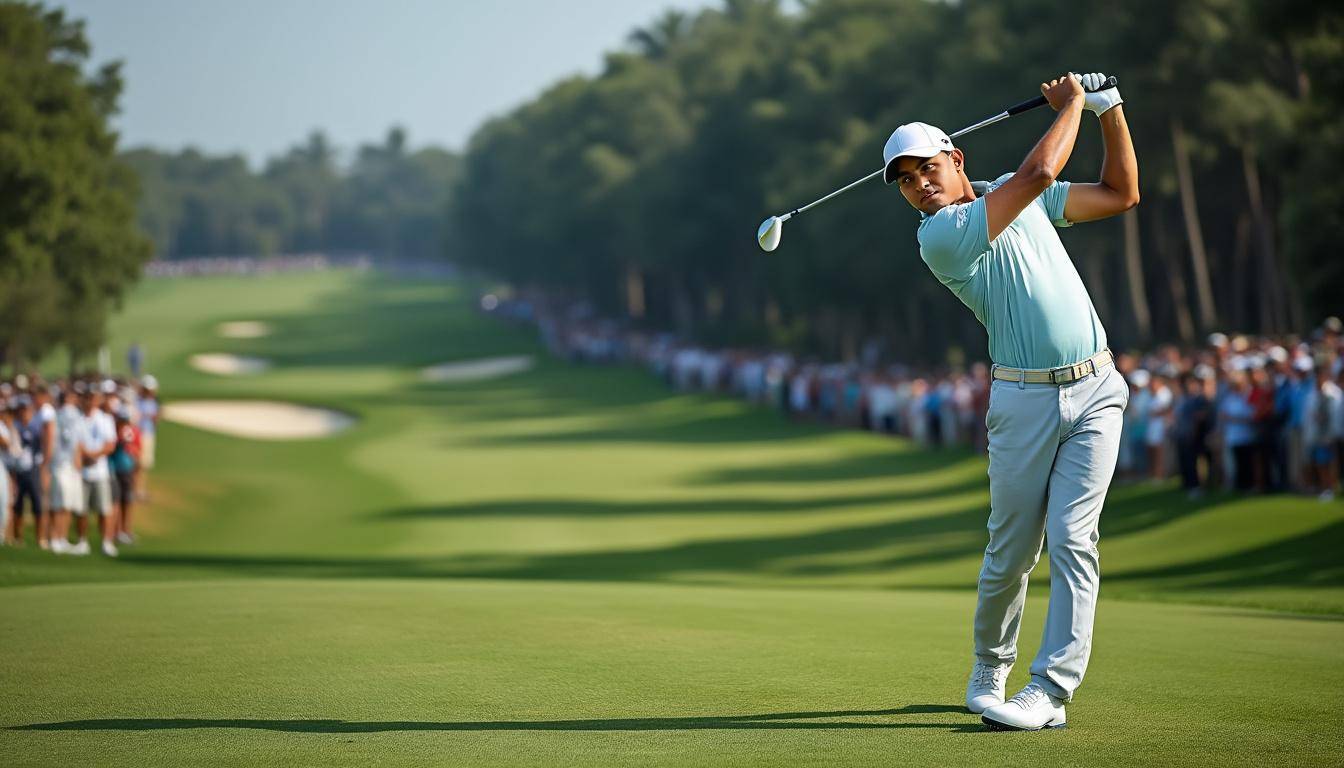
Akshay Bhatia’s heartfelt golf debut at the Hero Indian Open in India mixed emotion, pressure and real lessons in sportsmanship. His story offers young golfers and parents a concrete example of how high expectations, heritage and performance meet on the course.
Akshay Bhatia heartfelt golf debut at Hero Indian Open
Akshay Bhatia waited years for this golf debut in India. He signed to play the Hero Indian Open soon after turning pro, but the tournament was canceled at the last moment because of COVID travel disruptions.
In 2026, the young golfer finally made the long 18‑hour trip from Orlando to New Delhi. He arrived as a three‑time PGA Tour winner, ranked inside the top 25 in the world, and as a Hero brand ambassador returning to his ancestral homeland.
For many Indian and Indian‑American families following the tournament, his presence on the DLF Golf and Country Club course meant more than scores. It represented a different path to success, outside the usual focus on engineering or medicine.
First round nerves and a tough start for Akshay Bhatia
Akshay Bhatia’s opening shot in this long‑awaited debut went out of bounds. He lost a ball and posted 44 on the front nine before recovering slightly to sign for 77. His own comment, “At least I did not shoot 80,” showed humility and perspective.
The Hero Indian Open course is narrow, demanding and not packed with scorable holes. For junior players watching, this round showed that even an elite golfer can struggle during an emotional week and still hold on to respect and composure.
Instead of blaming the course or conditions, he accepted responsibility and focused on learning. That reaction is a practical model of sportsmanship you can discuss with young athletes after a bad day in any sport.
Young golfer journey of Akshay Bhatia from junior to world stage
Akshay Bhatia grew up in North Carolina and turned professional at 17. He skipped college golf and entered the professional circuit through sponsor exemptions, an unusual route for a young golfer with Indian roots.
By 2026 he had three PGA Tour titles, including the Arnold Palmer Invitational earlier in the month, and a run of top‑16 finishes worldwide. His performance trend before the Hero Indian Open showed consistency, not a one‑week surprise.
For students and parents, his story underlines how early specialization, structured practice and family support create an alternative education in discipline, time management and mental strength.
Family expectations, academics and sport
In many Indian‑origin families, academic performance still sits above sport. Fellow Indian‑American pro Sahith Theegala has described relatives asking when he would stop golf and focus on studies, exams and traditional careers.
Akshay Bhatia faced similar tension at home. His mother worried about education and asked about a backup plan if golf failed. His father pushed strongly for the dream and accepted sacrifices in travel, time and money so his son could compete across junior events.
This family debate is familiar to many students who love sport. It raises a practical question for parents: how do you balance school, passion and risk without dismissing any side completely?
Lessons for parents from Akshay Bhatia’s path
Families following Akshay Bhatia’s heartfelt golf debut in India can extract clear, actionable points. You do not need an elite budget to apply the same logic to your child’s growth.
- Ask about long‑term commitment: Before supporting intensive training, talk with your child about how serious they feel, over several months, not one week.
- Set dual goals: Keep minimum academic standards while supporting sport. Agree on grades that must stay stable before extra tournaments.
- Share sacrifices: Involve your child in travel planning, costs and schedules so they understand what the family gives up.
- Plan reflection moments: At the end of each season, review progress honestly in both school and sport and adjust the plan.
- Protect mental health: Frame sport as a space to grow character, not a source of constant judgment or comparison with cousins or classmates.
This kind of structured approach turns a risky path into a guided personal development project, even if your child never reaches a world‑class tournament.
Hero Indian Open performance and sportsmanship in India
For Akshay Bhatia, performing in India meant more than chasing a trophy. The Hero Indian Open allowed him to connect with extended family, meet relatives he had only heard about and explore historic sites such as the Taj Mahal as promised by Hero MotoCorp’s leadership.
Walking the course in New Delhi, surrounded by fans who shared his heritage, made his golf debut in India emotional even with a difficult scorecard. Young spectators saw a successful Indian‑origin player who chose a different track than the traditional academic route.
His behavior on the course, talking with fans and signing autographs after a rough round, reinforced the core idea of sportsmanship: respect for the game, the crowd and yourself, even when performance drops.
What students and young golfers learn from this debut
If you guide students or young golfers, Akshay Bhatia’s experience at the Hero Indian Open offers concrete talking points. His heartfelt approach under pressure helps move beyond simple hero worship and into practical reflection.
You might ask your learner: how would you respond to an opening tee shot out of bounds in front of a home crowd? Would you accept the score, adjust, and keep trying, or collapse mentally?
Use his story to highlight three core skills for any young athlete in school or club sport: emotional control, persistence after mistakes and gratitude for those who support the journey.