

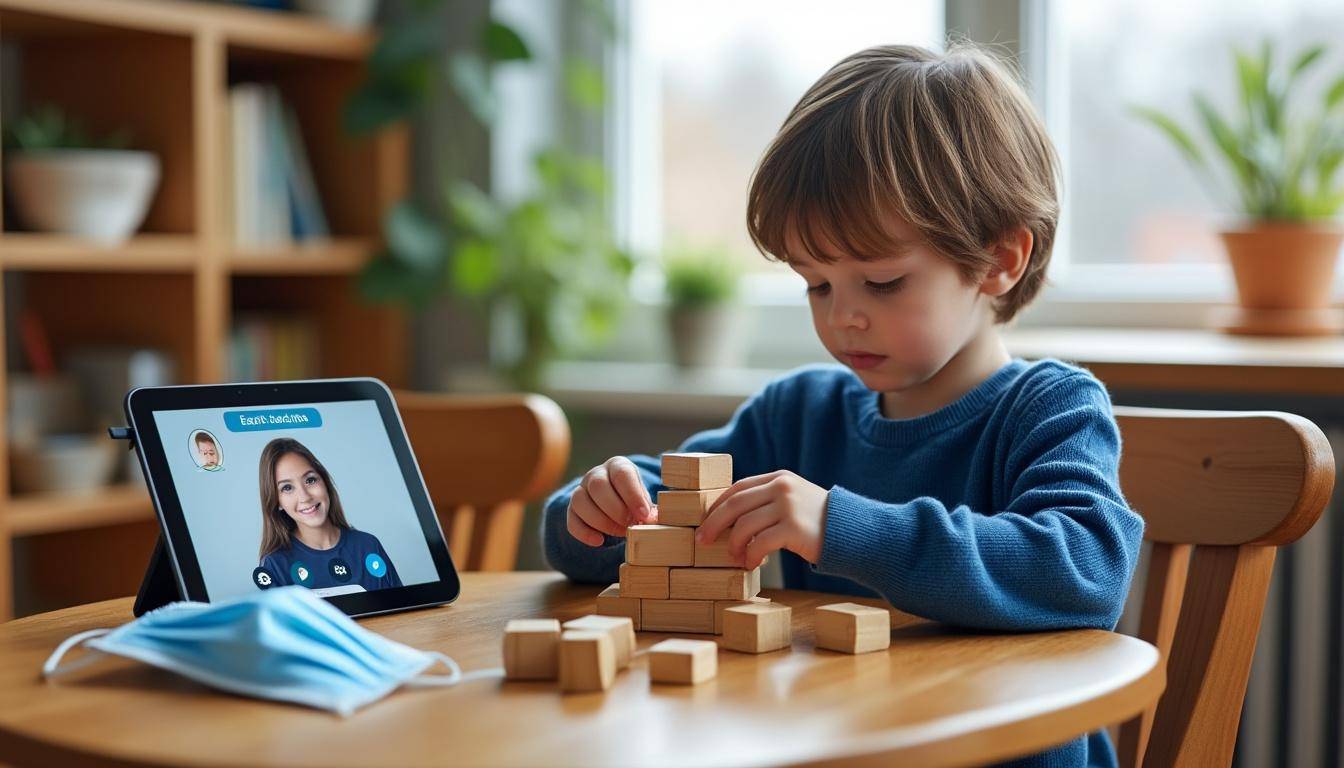
COVID-19 hit young children at a sensitive stage of child development. New longitudinal findings show how the pandemic slowed the growth of executive functions such as attention, impulse control, and flexible thinking during early childhood.
COVID-19 and executive functions in early childhood
Executive functions are the mental skills that help your child focus, plan, remember instructions, and manage emotions. They form the core of healthy cognitive growth and social behavior.
Before COVID-19, studies showed a steady rise in these skills from around 2.5 to 6.5 years. Researchers working with a cohort of 139 children in one major research study saw clear year‑to‑year progress using standardized tools such as the Minnesota Executive Function Scale.
When COVID-19 hit, school closures, social isolation, and routine disruption changed this trajectory. The same children showed slower gains in executive abilities, especially in tasks that required self‑control and adapting to new rules.
Pandemic impact on self‑regulation and behavior
Parents and teachers reported more tantrums, difficulty waiting, and trouble following multi‑step directions during the COVID-19 period. These behavioral changes matched test data that showed weaker growth in inhibitory control and working memory.
For example, a child like “Leah,” who at 4 years handled turn‑taking games smoothly in preschool, struggled after months of lockdown. Back in class, she found it harder to stop talking when others spoke, to shift from playtime to clean‑up, and to keep rules in mind during group activities.
Such patterns point to a genuine pandemic impact on self‑regulation, not only temporary mood shifts. When executive skills grow slowly, you often see more impulsive behavior, frustration, and social misunderstandings.
How COVID-19 disrupted neurodevelopment and cognitive growth
Early childhood is a period of intense neurodevelopment. Brain networks that support planning, attention, and emotional control strengthen through rich, repeated experience with people and environments.
COVID-19 removed or weakened many of these experiences at once. Reduced peer play, fewer in‑person lessons, and higher family stress all influenced the fragile growth of executive functions.
In the longitudinal data, children still improved over time, but the slope of growth flattened during the pandemic years. This means they learned, yet at a slower pace than similar pre‑pandemic groups.
Key factors behind developmental delays
Researchers highlight several drivers of developmental delays in executive skills during COVID-19:
- Social isolation reduced chances to practice sharing, turn‑taking, and conflict resolution with peers.
- School closures cut structured routines, classroom rules, and guided learning tasks that train attention and memory.
- Remote learning was often passive, with limited opportunities for hands‑on play, feedback, and group problem‑solving.
- Family stress from health fears, job loss, and cramped housing raised emotional tension at home.
- Unequal access to devices, quiet spaces, and high‑quality early education widened pre‑existing gaps.
Each factor alone challenges executive skills. Together, they shaped a context where many children struggled to maintain normal cognitive growth.
Research studies tracking executive functions across the pandemic
Several teams followed children before and after COVID-19 to isolate its effects on child development. This type of research study is stronger than single‑time surveys because it tracks real change.
One early childhood project followed children from toddlerhood through the first years of school. Up to early 2020, scores climbed in a typical pattern. When the pandemic began, the expected jump in executive function scores between age points was smaller than in earlier waves.
Another project with elementary‑aged children used repeated lab tasks to measure attention and flexibility. Again, the pace of improvement slowed after school closures, especially for children who engaged less with remote learning platforms.
Links between pre‑pandemic skills and COVID-19 adjustment
Some data show that stronger executive abilities before COVID-19 helped children cope better with stress during the first year. Youth with better working memory and impulse control reported fewer emotional and behavioral difficulties.
For a child like “Noah,” who already managed his emotions and followed instructions well, the pandemic still brought challenges. Yet he adapted to online routines more easily and returned to school with fewer setbacks in learning and peer relations.
This pattern suggests that supporting executive functions early in life prepares children not only for school tasks but also for unexpected shocks such as a global crisis.
Pandemic impact on behavior at home and in school
COVID-19 did not only affect test scores. It also shaped daily life behaviors linked to executive functions. Parents often saw longer screen time, irregular sleep schedules, and more resistance to transitions.
Teachers noticed wider gaps when schools reopened. Some children adapted quickly. Others had trouble sitting for group time, remembering instructions, or shifting between activities without outbursts.
Differences by age, gender, and learning profile
Studies of social isolation during COVID-19 found that effects on executive functioning varied. Younger children showed particular trouble with impulse control, while older ones struggled more with flexible thinking and planning.
Girls and boys sometimes displayed different patterns of behavioral changes. In some samples, boys showed more visible hyperactivity, while girls reported higher internal stress despite outward compliance.
Children with existing learning difficulties experienced stronger disruption. For them, less classroom support and therapy often meant greater developmental delays in both academic and self‑regulation skills.
Supporting executive functions and child development after COVID-19
Although COVID-19 slowed neurodevelopment in executive skills, these abilities remain plastic. With targeted support, children gain ground, especially in the early years.
Families, schools, and communities now play a central role in rebuilding routines, relationships, and learning environments that strengthen executive functions. The focus shifts from what children missed to how you support them now.
Practical strategies parents and teachers use
You do not need complex tools to support cognitive growth. Daily habits offer many chances to train attention, memory, and control.
Here are concrete practices you can apply:
- Create predictable routines
Use simple visual schedules for morning, homework, and bedtime. Predictability lowers stress and frees mental resources for self‑control. - Play rule‑based games
Games like “Simon Says,” memory cards, or simple board games stretch inhibition, working memory, and flexible thinking. - Break tasks into steps
Ask your child to repeat the steps back to you. This strengthens verbal working memory and planning. - Coach emotions
Name feelings, teach breathing or counting strategies, and praise effort when your child calms down after frustration. - Encourage independent problem‑solving
Instead of fixing every issue, ask “What is one thing you try?” to practice planning and reflection.
Each of these strategies targets core aspects of executive functions in everyday moments.
Role of schools, play, and arts in executive function recovery
Schools hold a unique place in rebuilding child development after COVID-19. Structured classrooms, peer groups, and guided practice offer ideal settings to retrain attention and flexibility over time.
High‑quality programs integrate free play, guided group work, and arts activities to support neurodevelopment broadly, not only test scores. This holistic approach becomes essential after a period of disruption.
How play and arts strengthen executive functions
Unstructured and semi‑structured play is a proven driver of executive functions. On the playground, children negotiate rules, wait their turn, and adapt when games change.
You support this growth when you protect recess and playful learning. Resources on how play and recess enhance learning show how movement and social interaction reinforce self‑regulation and attention.
Arts activities offer another strong route. In drama, music, or visual art, children plan, remember sequences, inhibit impulses, and shift ideas. Guidance on arts education for children highlights how creative practice supports both academic skills and executive control.
From pandemic impact to long‑term child development
Families and educators now face a long‑term task. COVID-19 did not only interrupt one school year. It altered the early experiences that drive cognitive growth and executive functions for an entire cohort.
For Mia, now in third grade, the story of her learning path will always include a year of remote lessons and limited peer contact. Yet with consistent support at home and in school, her attention span, planning skills, and emotional control still progress.
Why early and ongoing support matters
Early childhood is sensitive, yet not fragile beyond repair. When adults respond with patience, structure, and rich learning environments, children affected by COVID-19 disruptions still reach strong outcomes.
Policies that support stable child care, inclusive schooling, and trained educators reinforce this process. At system level, such efforts match what parents do daily in homes and classrooms to reduce developmental delays and guide healthy neurodevelopment.
The core lesson from recent research is clear: the pandemic impact on executive functions in young children is real, but so is their capacity to grow when you invest time, attention, and meaningful experiences in their lives.