

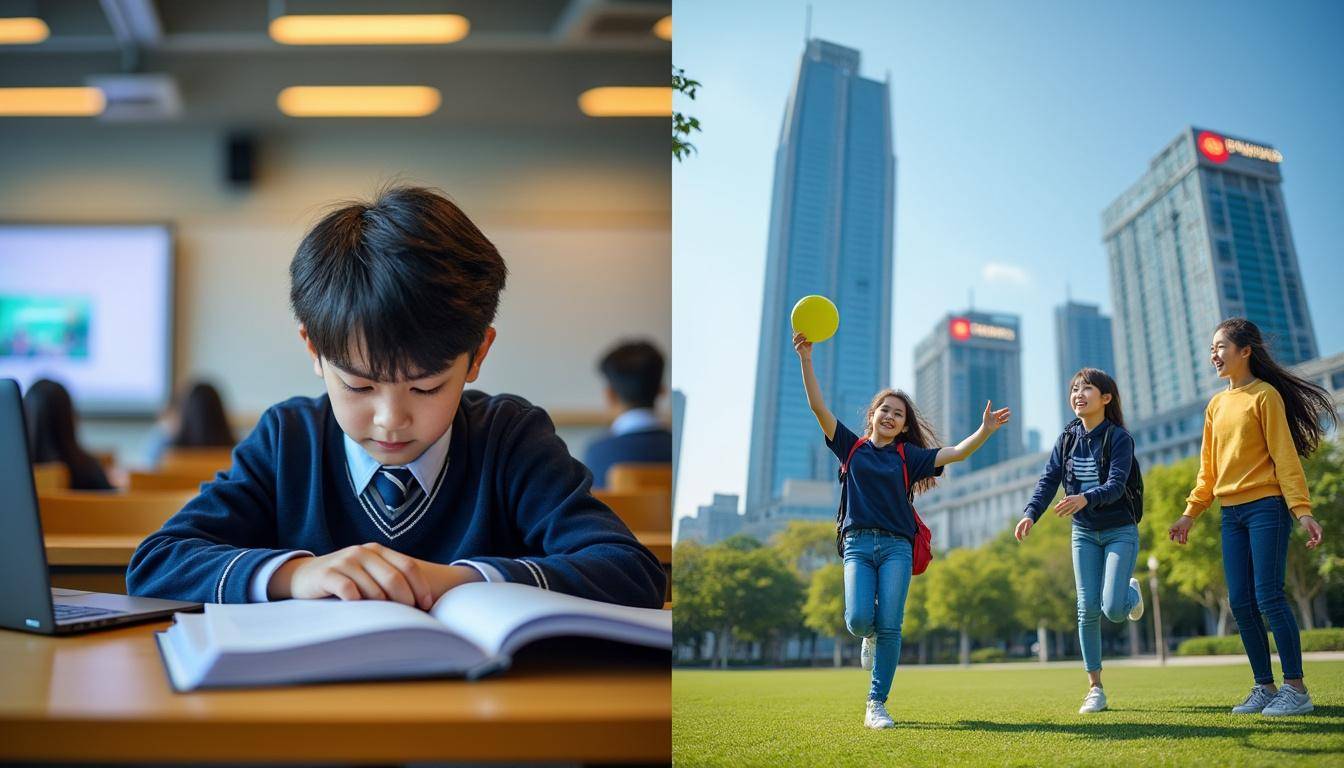
South Korea’s cram schools shape how children study, feel, and grow. To understand your child’s future, you need to look at cram schools, Academic Success, and Student Happiness together, not separately.
Cram Schools in South Korea: Success, stress, and early study culture
Cram Schools in South Korea, known as hagwons, have become part of daily life for many families. Children attend regular school during the day, then move to private academies for extra lessons in math, English, Korean, and exam skills.
In recent years, almost half of children under six have joined some form of private course. This early Study Culture starts long before primary school and prepares children for a system built on Exam Preparation and rankings.
Parents invest large parts of their income to secure better grades, better schools, and better jobs for their children. At the same time, public debates about Education Pressure, inequality, and Mental Health have grown louder.
Academic Success through cram schools: what the data shows
South Korea often ranks high in international assessments in math, reading, and science. Many observers link this to intensive private education. Students spend extra hours in Cram Schools focused on test-taking strategies, practice questions, and targeted feedback.
Families who afford elite hagwons often aim for top universities, especially the so-called SKY universities in Seoul. Admissions data over the years shows a strong overrepresentation of students who have followed long-term private tutoring from primary school onward.
This pattern strengthens the belief that more hours in cram academies lead directly to Academic Success. Yet it also raises a new question: success for whom, and at what cost for Student Happiness.
Student Happiness and mental health under education pressure
High test scores do not automatically bring high Student Happiness. Surveys of teenagers in South Korea show frequent stress, sleep deprivation, and anxiety linked to grades and exams. Many students describe study as a race they cannot stop.
Long school days followed by late-night hagwon classes reduce time for hobbies, friendships, and rest. Over time, this affects Mental Health, with growing concerns about depression, burnout, and even self-harm among adolescents.
Work-life balance for teenagers in South Korea
Adults talk often about Work-Life Balance, yet teenagers in South Korea also face this struggle. A typical high schooler like Min-jun, for example, leaves home at 7 a.m., attends school until late afternoon, then moves straight to a hagwon until 10 or 11 p.m.
Homework and self-study fill the remaining hours. Sleep shrinks to five or six hours. Weekends, instead of rest, become extra time for mock tests and intensive Exam Preparation. Free time turns into “lost time” in many students’ minds.
Over time, this schedule makes it hard for young people to develop interests beyond school. When study defines identity, any failure on a test feels like a failure as a person. A healthy Work-Life Balance for youth requires clear limits on study time and protected hours for rest and connection.
Education pressure and school refusal
Not all students respond to pressure by studying more. Some withdraw. A small but worrying number avoid school altogether or experience school refusal linked to anxiety and overload. This mirrors patterns seen in other countries where academic demands rise without enough emotional support.
If you want to understand how stress can push children away from learning, the story described in this detailed journey about the school refusal crisis offers helpful insight for parents and educators.
Parental expectations in South Korea’s cram school system
Parental Expectations sit at the center of the South Korean Study Culture. Many parents grew up in poverty or economic uncertainty and see education as the safest path to stability. For them, hagwons are not a luxury but a duty.
Parents compare test scores, talk about which hagwon has the best results, and push schools and tutors to extend hours. Some cram school operators report late-night classes because families ask for every possible advantage.
How expectations shape children’s mindset
When children hear daily that “your future depends on this exam,” they internalize high stakes from a young age. Many strive hard and reach impressive Academic Success, but some develop fear of failure and perfectionism.
Parents often act from love and sacrifice. Yet without careful listening and open dialogue, children might hear only pressure, not support. Over time, this harms Student Happiness and reduces motivation to learn for its own sake.
Guides on kids’ exam parenting advice explain how to combine ambition with emotional safety, which is as relevant in Seoul as in any other city in the world.
Early childhood, cram schools, and long-term development
The spread of hagwons to preschool age raises deep questions. If almost half of children under six attend some form of private class, their first contact with learning often comes through structured lessons, not free play.
Early Education Pressure shapes how children see themselves. When praise centers on speed, scores, or being “ahead,” some children learn to link worth with performance. Others lose interest because learning feels like work instead of exploration.
Balancing early learning and happiness
Research on early childhood across countries stresses the importance of play, conversation, and secure attachment. Quality early learning does not require endless worksheets. It needs responsive adults, rich language, and safe spaces to explore.
Resources about child care and early learning highlight practices that support thinking skills and emotional resilience without heavy test preparation.
When parents in South Korea choose between more hagwon hours or more playtime, they indirectly choose between short-term performance and long-term Mental Health. Both matter, but the balance shapes future Student Happiness.
How cram schools influence inequality and opportunity
The cram school economy in South Korea involves significant spending from families. Elite hagwons in large cities charge high fees. Children from wealthier districts attend multiple academies, while lower-income families struggle to keep up or drop out of the private system altogether.
This gap affects admissions to selective high schools and universities. When top institutions draw heavily from students with long-term hagwon support, the education system risks reproducing social class rather than transforming it.
Cycle of pressure and poverty
For some low-income families, spending on Cram Schools becomes a burden that deepens financial stress. Parents feel trapped between wanting the best for their children and the reality of limited resources. This situation contributes to anxiety for both generations.
If a student invests years in intensive Exam Preparation but still misses entrance to a top university, family sacrifices feel wasted. This pattern leads some researchers to argue that hagwons sometimes perpetuate, rather than reduce, the cycle of poverty.
An honest look at Academic Success in such a system must include these unequal starting points and not only final scores on exams.
Government policies and the future of cram schools
South Korean governments have tried several times to regulate private education. Policies have included curfews for hagwons, limits on late-night classes, and strict inspections to prevent illegal operations.
Despite these efforts, demand for Cram Schools stays high because families do not trust public schools alone to secure competitive advantages. Each new attempt to limit hours faces resistance from parents, hagwon owners, and sometimes students who fear falling behind.
Learning from international debates
Other countries in Asia, Europe, and North America also debate test pressure, tutoring, and children’s well-being. Policy discussions, such as reforms to public schooling or education bills in different states, show how governments try to balance standards with health.
For a broader view on how laws shape schooling, you can look at this analysis of an education bill in Indiana. While the context differs from South Korea, the core issue remains similar: how to support learning without harming students’ Mental Health.
Future policy in South Korea will need not only rules for hagwons but also faith in public schools, investment in teachers, and social agreement on what success means beyond test scores.
Practical strategies for healthier success in South Korea’s study culture
Parents, teachers, and students in South Korea face real constraints. Entrance exams still matter, and the cram school industry remains strong. Yet within this reality, you still hold room to change everyday practice and protect Student Happiness.
Steps parents and students can take
Here are practical strategies to reduce harmful Education Pressure while maintaining Academic Success:
- Set clear limits on study hours: Agree on a fixed time when study stops every evening to protect sleep and Mental Health.
- Choose fewer, higher-quality cram classes: Focus on areas where support is truly needed instead of filling every free slot with hagwons.
- Prioritize sleep and nutrition: Treat rest as a core part of Exam Preparation, not an extra to cut.
- Schedule regular free time: Protect weekly time for hobbies, friends, or sports to support a more balanced Work-Life Balance.
- Talk openly about stress: Make it normal for children to describe worries and ask for help without shame.
- Celebrate effort, not only results: Praise persistence, strategies, and kindness so identity does not rest only on scores.
- Model balance as adults: When parents respect their own limits, children learn that success includes health.
These steps do not remove competitive exams, but they help children stay whole while preparing for them.
Rethinking the meaning of success
At the heart of the issue lies a question: what kind of adults do we want our children to become. High-achieving, exhausted, and anxious, or capable, resilient, and content.
A more humane definition of Academic Success includes curiosity, social skills, and the ability to work with others, not only entrance to famous universities. Parents and schools who adopt this broader vision give young people room to grow beyond test scores.
South Korea’s cram schools will likely remain part of the system for years. Yet by adjusting expectations, daily routines, and support for Mental Health, families and educators hold the power to align Study Culture with long-term Student Happiness and healthy Work-Life Balance.