

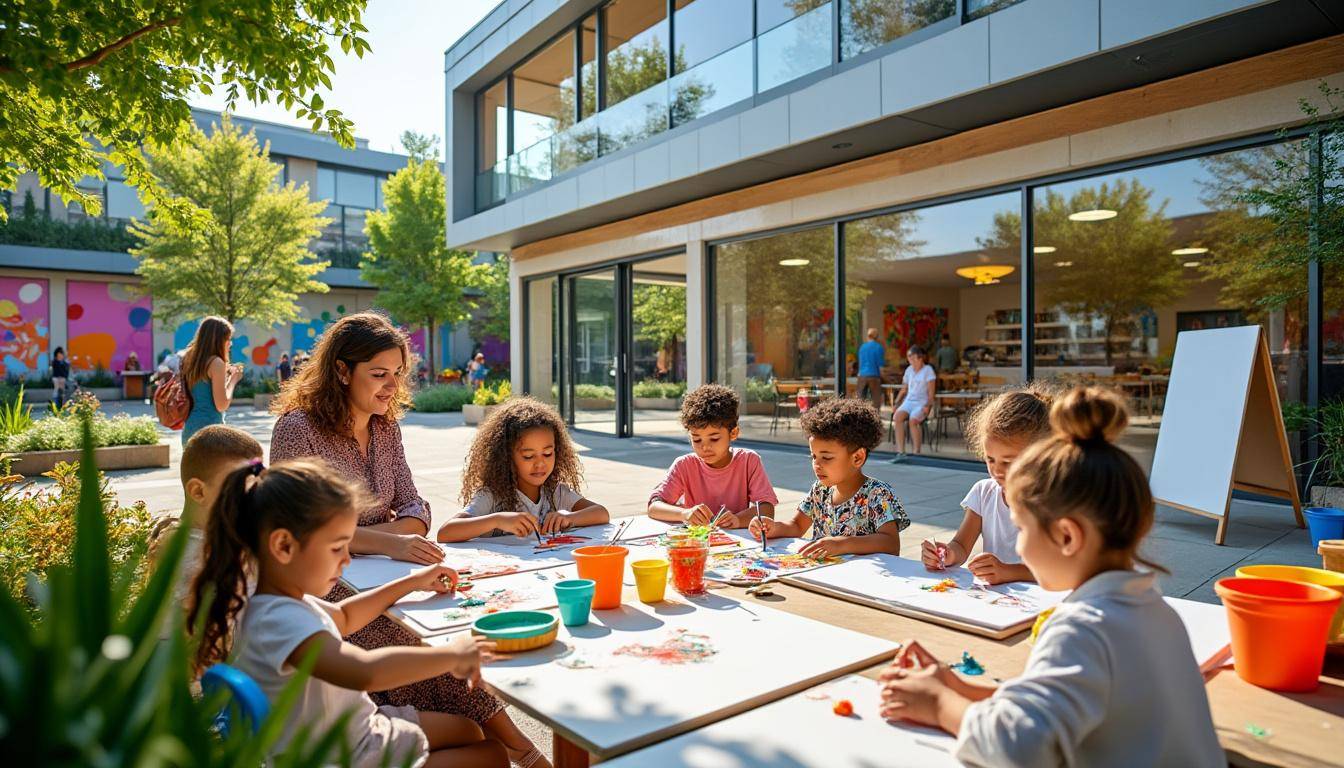
The new RED Children’s Art Museum in Detroit’s Grandmont Rosedale neighborhood gives kids, parents, and educators a fresh space for hands-on visual art and early learning. This children-focused art museum links play, creativity, and education in a neighborhood setting, right on Grand River Avenue.
Children’s Art Museum in Detroit Grandmont Rosedale: A New Creative Hub
The RED Children’s Art Museum sits in the heart of Grandmont Rosedale, between a smoothie shop and a local bookstore. Families walk in from Grand River and step straight into a bright, one-room space filled with color, art materials, and children’s artwork.
Founder Yvette Rock, a Detroit artist and educator, opened this new version of the museum after her first location in another neighborhood closed when the building changed ownership. She saw a gap in Detroit: there were children’s museums, but no dedicated Children’s Art Museum focused on visual arts.
During her research, she visited art-focused spaces for kids in New York, including the Sugar Hill Children’s Museum of Art and Storytelling. The RED in Detroit brings a similar spirit into a smaller, neighborhood-based museum that puts local children and local artists side by side.
Why this Detroit Children’s Art Museum matters for families
The RED gives families in Detroit’s northwest side a place to visit after school or on weekends without driving across town. It supports parents who want more than screens and passive entertainment for their kids.
Rock’s goal is simple and direct: she wants every child who walks into the museum to feel that art is for them. By placing children’s drawings, Lego structures, prints, and paintings on the same walls as work by professional Detroit artists, the museum sends a clear message about creative potential.
This mix of professional and youth work makes the RED more than a gallery. It becomes a shared learning space where kids see what is possible and then test it with their own hands.
Hands-On Creativity: What Kids Do Inside The RED Museum
The RED Children’s Art Museum is one large room divided into stations. Each station supports a different form of creativity and gives kids freedom to explore at their own pace. Families stay in one open space, which helps adults supervise children of different ages at once.
The name “The RED” itself refers partly to the primary color, one of the first concepts young children meet in early art education. From color mixing to construction, the entire space invites experimentation.
Open Studio days at the Children’s Art Museum
On Thursdays, the museum hosts Open Studio time. Tables hold colored pencils, paint sticks, markers, collage materials, and construction paper. Children pick their own materials and follow their ideas, not a strict project outline.
Staff often place sample projects or short “how to” guides on the tables. Some kids follow the sample step by step, while others dive into their own designs. This flexible setup respects different comfort levels with art.
For a 7-year-old who loves drawing superheroes, Open Studio becomes a place to develop a series of characters. For a preschooler, simply gluing paper shapes and exploring color is a full learning experience.
Drop-in workshops for kids and teens
On Saturdays, the Children’s Art Museum runs drop-in workshops led by teaching artists and staff. These sessions vary in complexity so families can decide on the spot whether to join.
One Saturday might focus on printmaking, another on Lego structures, and another on portrait drawing. Older kids often choose more complex projects, while younger ones stay in the early learning corner or work on simpler tasks.
This drop-in structure supports busy parents who prefer flexible weekend plans. You arrive, look at the activity, and decide if it fits your child’s energy, age, and interest level.
Early Childhood Education and Creativity at The RED Museum
The RED is not only about fun. It links art, education, and early childhood development in a targeted way. Rock has a background in K‑12 visual arts education, and this experience shapes the design of the space.
Research in early education shows that drawing, cutting, painting, and building support fine motor skills, visual perception, and early problem solving. The museum uses these findings in simple, family-friendly activities.
Early learning corner for the youngest kids
In one area of the museum, young children find an early learning corner with toys, books, and simple art materials. Parents stay close while older siblings work in the Open Studio or join a workshop.
This setup respects the needs of toddlers, who require more movement, sensory play, and frequent breaks. At the same time, it lets parents supervise all their children in a single open room.
The early learning corner supports the same core goals as the rest of the museum: build curiosity, support coordination, and make art feel natural from the earliest years.
Art as a tool for learning, not a talent test
Many adults grew up hearing that art is a “gift” you either have or do not have. The RED openly rejects this idea. Staff remind kids that art skills grow through practice and teaching, just like reading or sports.
When a child points to a print on the wall and says “I wish I could do that,” staff respond by walking them through simple steps. “You want to make a print? Let’s make a print.” The process becomes transparent, not mysterious.
This message lines up with wider work in arts education worldwide. For instance, programs like those highlighted in this feature on arts education initiatives show that structured exposure and instruction matter more than raw talent.
Community Impact: Grandmont Rosedale and The RED Children’s Art Museum
The RED is deeply anchored in the Grandmont Rosedale neighborhood. Local residents helped shape the vision, and nearby businesses partner informally with the museum. The space fits into an existing culture of community events like the Grandmont Arts & Crafts Fair.
Co-owner of the neighboring Pages Bookshop, Jelani Sowers, calls the museum an ideal neighbor. He sees steady potential for crossover events where kids write poetry after a gallery visit or design book covers based on stories they read.
Why the neighborhood needs this museum
Residents note fewer children playing outside than in previous decades, with more time spent on devices and fewer youth-centered spaces in walking distance. The RED offers an alternative, especially in summer when school is out and parents look for meaningful activities.
Instead of another afternoon in front of streaming shows, a family can walk or drive over for a few hours of making, building, and looking. The cost structure, including free admission for children under 5, keeps the space accessible.
For Detroit parents who want to act as partners in education, this kind of local resource supports their efforts. Guides such as this article on empowering parents as education partners emphasize the importance of informal learning spaces like museums and libraries.
Field trips, school partnerships, and shared projects
The RED already receives requests from teachers for school visits and student exhibitions. Wednesdays are set aside for school groups and tours, which keeps the space focused on structured learning during those hours.
One teacher asked about hosting a student art show inside the museum. In that scenario, students would see their work framed and lit on real gallery walls, with families and classmates walking through like visitors at a larger institution.
These collaborations link classroom learning with real-world experience and encourage teachers to integrate art more deeply into their curriculum.
Programs, Jobs, and Memberships at The RED Museum
Beyond regular visits, the Children’s Art Museum runs structured programs for kids and teens. The most notable example is a summer arts employment training program for high school students. This six-week paid role introduces teens to both art-making and museum work.
Teens learn to guide younger children, help design activities, and understand how exhibitions are built. This experience combines career exploration with leadership development.
Memberships for families, students, and artists
The RED offers several membership options, including plans for K‑12 students, families, artists, and general community members. Memberships include free entry plus free or reduced-price access to special classes, workshops, and select work opportunities.
For a family that visits often, membership supports a habit of regular creative practice. For an artist, it opens long-term collaboration with a children-focused museum that values local talent.
Membership revenue also helps keep the space stable. Rock is clear that the museum must rely on a mix of memberships, rentals, and partnerships instead of only fluctuating grants.
Youth exposure to professional artists
In the earlier version of The RED, the team invited high-profile Detroit artists, such as Mario Moore, to work with children. Students first studied the artist’s style at the museum, then visited the Detroit Institute of Arts to see the work in a major collection.
This model will continue in the new Detroit location. Children learn that the same city that holds large institutions like the DIA also supports smaller neighborhood spaces like The RED.
Seeing a living artist speak about their path helps students view art-related careers as real options, not distant dreams.
Practical Info: Visiting The RED Children’s Art Museum in Detroit
The RED Children’s Art Museum is located at 19556 Grand River Ave., Detroit, in the Grandmont Rosedale area. The museum sits on a walkable commercial strip, close to local food spots and the neighboring Pages Bookshop.
Hours reflect a mix of school-focused time and family-friendly slots:
- Monday and Tuesday: closed
- Wednesday: 10 a.m. to 5 p.m., reserved for school groups and tours by request
- Thursday: 11 a.m. to 6 p.m.
- Friday: 11 a.m. to 6 p.m.
- Saturday: 11 a.m. to 5 p.m.
Children from birth to age 5 enter free of charge. Standard admission for older children, students, and families remains low-cost, with current details listed on the museum’s website. Membership options, including family and youth plans, are also accessible online.
Tips for parents and educators planning a visit
To make the most of a trip to this Children’s Art Museum, parents and teachers benefit from a bit of planning. Simple steps help turn a casual outing into a deeper learning experience.
- Ask your child before the visit what kind of art they want to explore, such as drawing, building, or painting.
- Set one small goal, for example “We will try one new material today” or “We will talk about one artwork on the wall.”
- Bring a notebook or use your phone to capture your child’s favorite pieces for follow-up projects at home or school.
- Talk on the way home about what felt hard, fun, or surprising during the visit.
- Connect the museum visit with school topics, like colors for kindergarten or geometry shapes for older grades.
Approaching the museum this way supports not only creativity but also language skills, reflection, and confidence.