

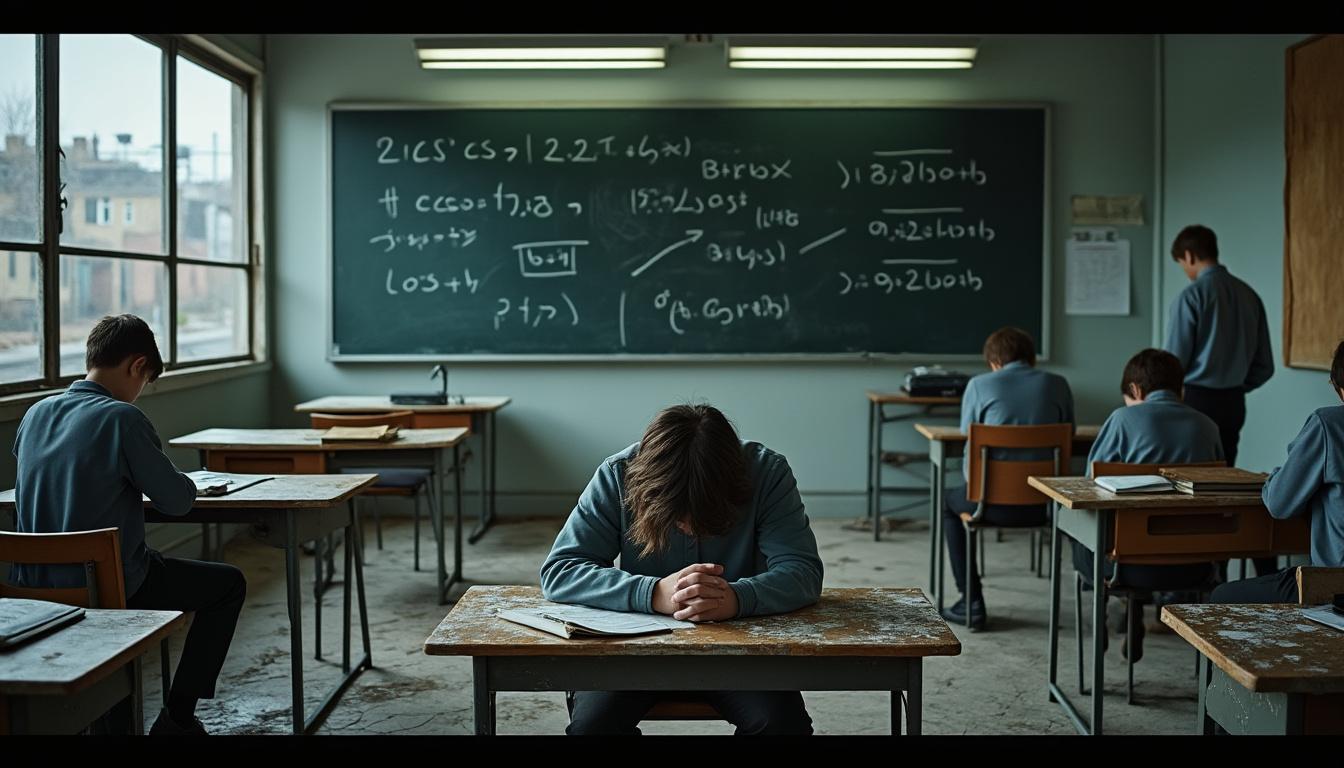
Education budget cuts look like a quick fix during fiscal stress. They are not. In every major economic downturn, schools absorb damage fast, while countries pay the bill for years through weaker growth, deeper inequality, and a less prepared future workforce.
This opinion is simple: treat education as core infrastructure, not a line item to trim when pressure rises. The long-term consequences of reducing public education funding reach far beyond classrooms, and the crisis impact spreads through families, labor markets, and public trust.
Education Budget Cuts Raise the Cost of Crisis
Global warning signs are clear. UNESCO reports 250 million children are out of school worldwide, while learning targets remain off track. UNICEF estimated 242 million students in 85 countries faced school disruption from climate hazards in 2024 alone, and attacks on education kept rising across conflict zones.
These figures are not narrow education data. They point to broader social impact, political fragility, and slower recovery after shocks. When leaders approve policy decisions that weaken schools during unstable periods, they make the next crisis harder to contain.
Why education budget cuts hit harder during instability
A family under stress does not experience a school closure as an abstract policy issue. Picture Lina, a 13-year-old displaced after flooding. If transport stops, school meals end, and classes move too far away, her parents face harsh choices. Work starts to replace learning. For many girls, school exit happens first and return rates fall fast.
This is where education budget cuts turn into a chain reaction. A learning gap becomes lost income later. Then it becomes weaker community trust and lower stability. The key point is direct: the damage compounds over time.
Evidence from fragile settings shows a clear pattern:
- School interruption increases dropout risk within months
- Lower attendance raises child labor and early marriage risk
- Learning loss reduces later earnings and employability
- Weaker educational equity widens class, gender, and regional gaps
- Reduced public education funding slows national recovery after crisis
When you cut schools in a crisis, you do not save money. You shift costs into welfare systems, labor markets, health services, and security budgets.
Long-Term Consequences of Public Education Funding Cuts
The phrase long-term consequences often sounds distant. In practice, the effects begin fast. Students who miss foundational literacy and numeracy struggle in later grades, and many never catch up without structured support. By late adolescence, this learning loss starts shaping wages, job access, and dependence on public aid.
The workforce angle matters. Employers need reading, math, digital skills, teamwork, and problem-solving. When public education funding falls during a crisis, the pipeline of talent weakens. The result is a less resilient future workforce and slower national growth.
Education budget cuts weaken educational equity
Budget reductions rarely hit all students in the same way. Children in affluent homes often keep learning through tutors, devices, and stable internet. Children in poorer areas lose more instruction, more support, and more time. This is where educational equity breaks down.
You see the same pattern in many systems. Special education support gets delayed. School counseling shrinks. Transport routes are reduced. Rural schools carry staff shortages longer. The result is not equal sacrifice. It is unequal damage.
Local reporting on district strain helps show what these pressures look like on the ground. Cases linked to district budget pressures and staffing tradeoffs and debates over state education funding choices reflect a wider issue: cuts do not land on spreadsheets alone. They land on children with the fewest buffers.
The lesson is practical. If leaders claim to care about fairness, they must protect the parts of education systems that keep vulnerable students connected to learning.
Crisis Impact on Schools Spreads Into the Economy
During an economic downturn, finance officials often search for fast reductions. Schools look like large, flexible systems, so they become easy targets. Yet education cuts produce delayed losses that are larger than the short-term savings.
Think about a city recovering from recession, flood damage, or conflict. If its schools fail to keep adolescents engaged, local employers later face weaker hiring pools. Youth unemployment rises. Informal work expands. Public frustration grows. This is not theory. It is a repeated pattern across fragile and stressed economies.
How policy decisions shape the future workforce
Good policy decisions do more than reopen school buildings. They protect continuity of learning under pressure. In conflict areas and disaster zones, systems perform better when they use community-based classes, accelerated learning, flexible schedules, and blended instruction tied to formal standards.
These models matter because enrollment alone is not enough. Students need measurable learning, recognized pathways, and a route into decent work. For adolescents, education linked with financial literacy, apprenticeships, or entrepreneurship support helps prevent exclusion and dependency.
If you want examples of why access protection matters, look at efforts focused on keeping education access secure during disruption and debates around special education support under budget stress. They show the same principle: continuity beats interruption.
The bottom line is direct. A country with a stable learning system builds a stronger future workforce. A country with recurring school breakdown builds recurring economic weakness.
Protect Education as Essential Infrastructure
Too many governments still treat schools as a service to restore after stability returns. That approach no longer fits the decade. Conflict, displacement, and climate shocks are part of normal planning conditions. Education systems must operate through disruption, not only after it.
This means treating schools as protected civilian spaces. It also means protecting teachers, safe travel routes, learning materials, school feeding, and local support networks. If those elements fail, every other investment leaks value.
Three moves that reduce long-term consequences
Leaders do not need abstract promises. They need actions that work under pressure. The most effective responses in fragile settings tend to follow three moves.
- Protect schools and staff. Keep learning spaces free from military use, improve safe transport, and build community protection systems.
- Design for continuity. Use accelerated learning, remedial support, trauma-informed teaching, and flexible delivery models when regular schooling breaks.
- Link learning with livelihoods. Give youth credible routes into training, apprenticeships, and enterprise support while keeping strong literacy, numeracy, and digital foundations.
These steps reduce crisis impact because they keep students connected to learning and to realistic futures. They also lower the social impact of exclusion, frustration, and lost opportunity.
Education Budget Cuts Are a False Economy
Supporters of austerity often frame education budget cuts as unavoidable. Yet the fiscal case for protection is stronger. Education reduces multiple risks at once: unemployment, exploitation, dependency, instability, and low productivity. Few public investments do so much across so many sectors.
If a ministry cuts schooling by 5 percent today but pays later through lower tax revenue, higher remedial costs, wider inequality, and expanded social support, was the cut efficient? No. It was deferred spending with added damage.
History offers enough proof. After the 2008 financial crisis, many systems spent years trying to restore staffing, repair learning gaps, and rebuild trust. After the COVID school disruptions, governments learned again that recovery is slow when learning continuity breaks. The lesson remains unchanged in 2026: protect education early or pay more later.
Readers who follow school decline and access gaps have seen related signs in reporting on urban district decline and student outcomes and on the need to fund children’s education before losses deepen. These cases reinforce the same message from another angle.
Partnerships keep public education funding effective
Governments do not carry this work alone. International agencies, civil society groups, school networks, and employers each hold part of the solution. The strongest results appear when financing, service delivery, and innovation work toward one plan instead of scattered pilots.
For you as a parent, educator, or citizen, this matters because partnerships shape what children experience day to day. Stable meals, catch-up classes, digital access, teacher support, and youth pathways all depend on coordination. Good systems make those links visible and durable.
Public education funding works best when it strengthens national capacity, protects access during shocks, and keeps standards clear. That is how countries reduce long-term consequences and limit future instability.