

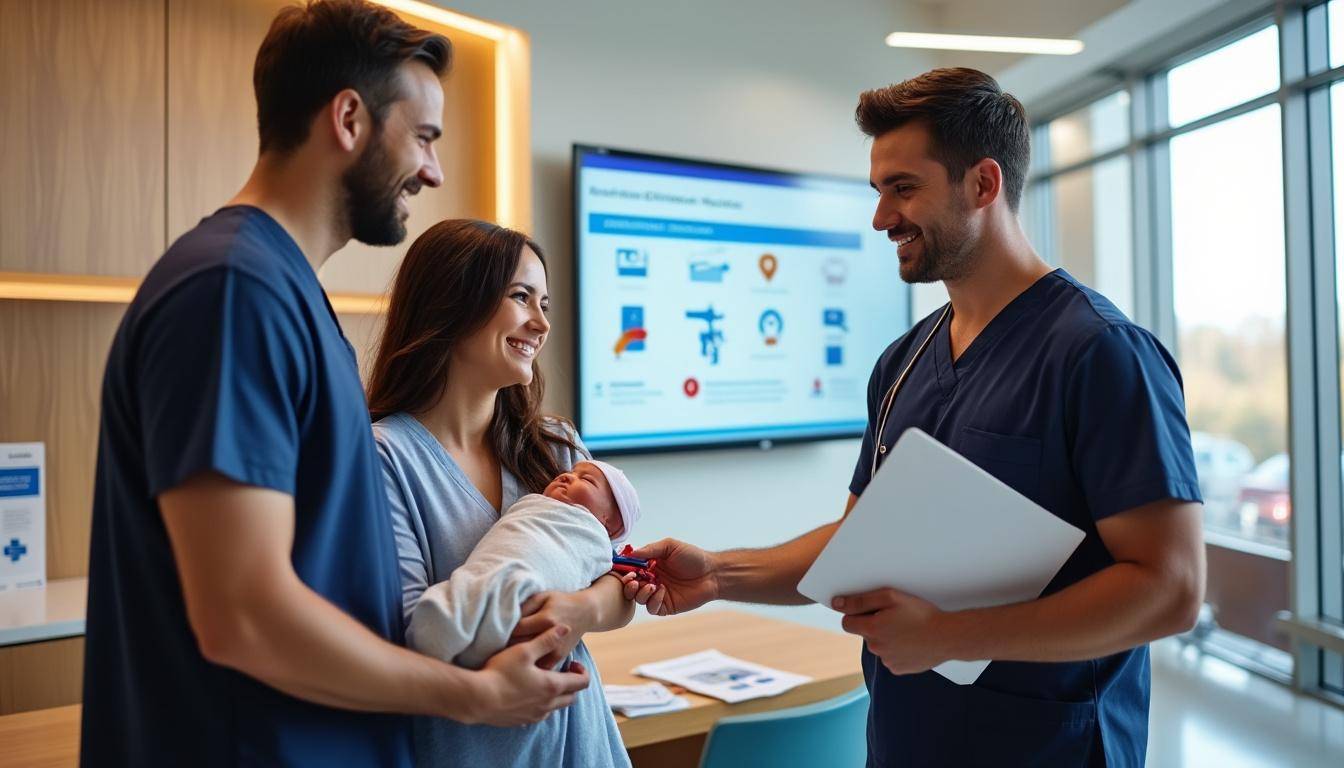
New parents at Erlanger Children’s Hospital now receive free gun safety tools as part of routine baby care. This simple step helps families build safer homes from day one.
Firearm safety resources for new parents at Erlanger Children’s Hospital
Erlanger Children’s Hospital now offers complimentary firearm safety resources to every family with a newborn. At discharge, parents receive firearm safety information cards and a free cable lock for any gun in the home.
The goal is clear. Make firearm safety and safe storage as normal as car seats, crib checks, or cabinet locks. Parents already think about outlets, stairs, and cleaning products. Firearms need the same level of attention if you want stronger child safety at home.
Why complimentary resources on gun safety education matter
In the United States, firearm injuries remain the leading cause of death for children and teens. In Tennessee, unintentional shootings by kids rank among the highest in the country, and the victim is often another child in the same home.
This is why complimentary resources for gun safety education make sense in maternity care. Parents leave the hospital with information and tools, not fear or blame. A free cable lock and a clear safety card turn an abstract risk into a concrete action step.
This approach fits into a broader movement for responsible gun ownership and injury prevention. It respects families while giving them clear guidance on how to protect their children.
Safe storage as a core child safety habit
Pediatric trauma surgeon and Safer TN board member Dr. Dave Bhattacharya explains firearm safety to parents in the same practical way he talks about car seats. A child in a bassinet cannot reach a gun, but babies grow into toddlers who crawl, climb, and explore every drawer.
Safe storage is more than a rule. It is a habit. When parents lock up firearms every single time, they remove one of the most serious dangers in a child’s environment. This is how parental guidance becomes real-life protection.
Practical safe storage steps for families
Parents often ask what “safe storage” means in daily life. It must be simple, repeatable, and hard to ignore when you are tired or distracted. A cable lock from Erlanger Children’s Hospital offers a direct answer.
- Store firearms unloaded every time, even if you think no child can reach them.
- Use a cable lock or locked container for every gun in the home.
- Keep ammunition locked in a separate place from the firearm.
- Store keys or lock combinations out of children’s sight and reach.
- Check storage again when routines change, such as visitors, moving, or travel.
When these steps become as routine as buckling a car seat, injury prevention starts to feel automatic rather than optional.
Voices for a Safer Tennessee and community health partnerships
The hospital’s program relies on a partnership with Voices for a Safer Tennessee (Safer TN) and the Tennessee Department of Safety and Homeland Security. Safer TN is a nonpartisan nonprofit with tens of thousands of supporters across all Tennessee counties.
This collaboration links clinical care, public safety, and community health. Safer TN helps supply the cable locks and educational cards, while the hospital team brings the conversation into everyday care for newborns and their families.
How this firearm safety program supports families
Parents often feel overwhelmed in the first weeks at home. They think about sleep, feeding, and medical appointments. Firearm safety might not be at the top of the list, even if guns are present in the home.
By handing parents a lock and clear instructions before they leave, the hospital brings gun safety education to the front of their mind. One Chattanooga mother explained that receiving the lock in the hospital helped her act in the first week, while she was already babyproofing outlets and furniture.
This approach treats new parents as partners. It gives them tools instead of lectures and helps them fit safe storage into their broader home safety plan.
Integrating firearm safety into broader parental guidance
Families receive many messages about safety: safe sleep, car seats, choking hazards, falls. Firearm safety fits naturally into this list. When health teams talk about guns the same way they talk about medicine bottles, parents respond with less defensiveness and more action.
For example, during a discharge conversation or a newborn checkup, a nurse can ask simple questions. Are there firearms in the home or in places your child spends time, such as grandparents’ houses? If so, what is the safe storage plan there?
Starting early with child safety conversations
Parents often wonder when to talk with children about guns. Experts suggest a two-part approach. First, secure every firearm from the moment the baby arrives home. Second, as children grow, add age-appropriate conversations about what to do if they ever see a gun.
This practical talk might include clear rules such as “do not touch, leave the area, tell an adult.” When locks and conversations work together, child safety gets stronger at each stage of development.
For wider context on how policy and home practices interact, you can explore legislative discussions on education and safety in resources like this overview of an education bill, which shows how public debates often connect school environments and home responsibilities.
Scaling injury prevention efforts at Erlanger Children’s Hospital
Erlanger Children’s Hospital plans to distribute thousands of cable locks and safety cards by the end of 2026. Each kit represents one family with clearer guidance on injury prevention and safe storage.
The hospital already leads other safety campaigns, such as programs on car seat checks, burn prevention, and fall reduction. Adding firearm safety creates a more complete approach to preventing severe childhood injuries.
From individual homes to community health impact
One cable lock in one home protects one child. When thousands of families adopt consistent storage habits, the impact reaches entire neighborhoods. Fewer children encounter loaded, unsecured guns. Fewer emergency surgeries. Fewer lifelong traumas for parents and siblings.
Programs like this also influence school safety, youth mental health discussions, and future parenting styles. Children raised in homes with strong safety habits often carry those standards into adulthood, which strengthens long-term community health.
Parents who want to deepen their understanding of policy and education topics connected to safety can also review analyses such as the one presented on Education to the Top, which highlights how formal systems intersect with family decisions.