
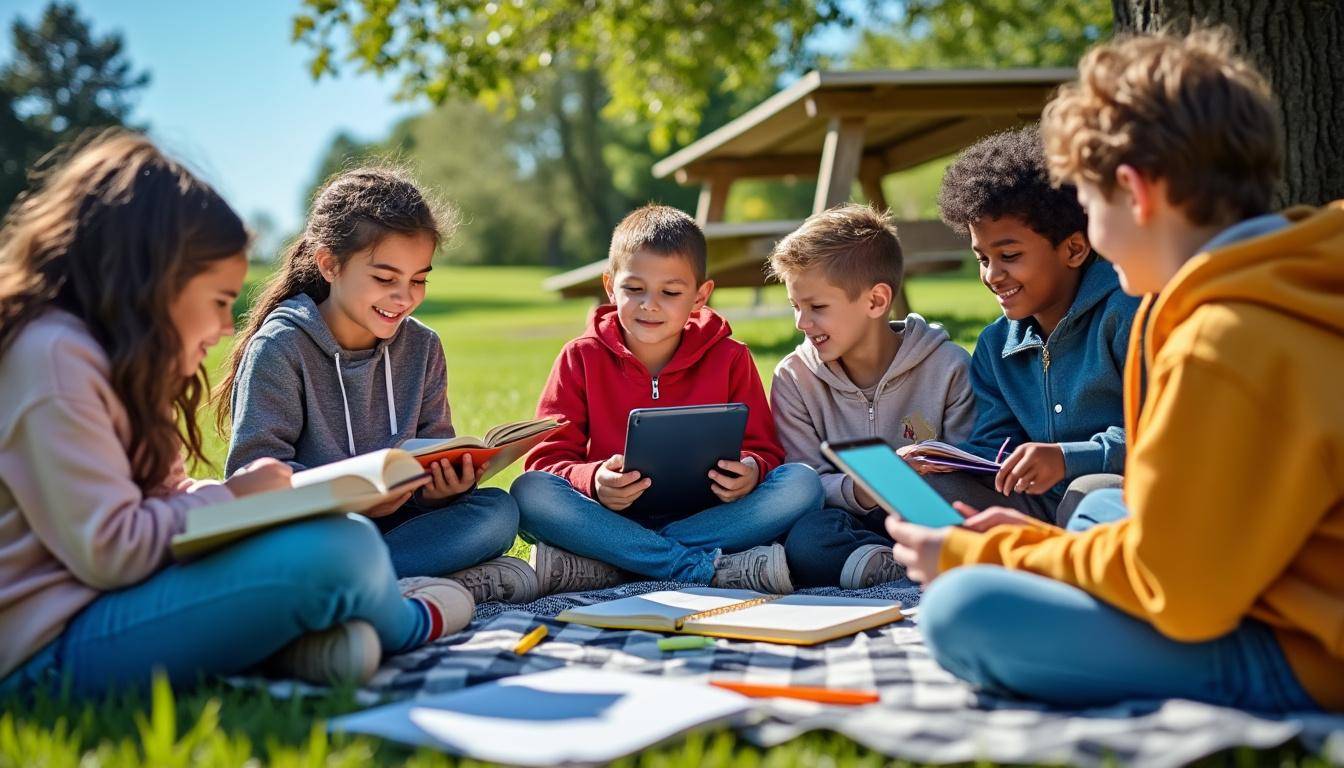
Home-schooled children are joining more social learning sessions, and this change shapes how families think about modern education. These new hubs mix home learning with rich peer interaction and structured support for child development.
Rise in home-schooled children and social learning sessions
Across England, local data and national reports show a clear rise in home-schooled children. In Nottinghamshire, for example, the number of children formally registered as educated at home moved from about 1,839 to 2,178 within one academic year, an increase of a little more than 18 percent.
This shift links closely with demand for social learning sessions. One practical case is the Ethereal Learning Foundation, founded by former assistant head teacher Deb Hadden. She started with only three children in small group activities. Attendance grew to around 55 children each week, with families travelling from different parts of the county to secure regular peer interaction for their child.
Why more families choose home education with social learning
Parents report several reasons for choosing home education combined with external learning sessions. The most frequent themes include rising childhood anxiety, sensory overload in large schools, and concerns about behaviour or bullying. Digital life also plays a part. Increased screen time and early social media use leave many children less practiced in face-to-face social skills and conflict management.
Deb Hadden describes the world as “quite a scary place” for some children. In her sessions, she sees pupils who struggled with busy classrooms but thrive once the noise level drops and expectations become more flexible. Families look for calm, structured spaces where home-schooled children can learn to share, negotiate, and manage emotions with peers.
How social learning sessions support home-schooled children
Most centres offering social learning for home-educated children focus on ages four to twelve. Children attend for fewer than fifteen hours a week. This keeps the setting outside formal school status while still giving consistent support. Parents hold responsibility for the main academic programme at home. The centre focuses on social skills, projects, and emotional growth.
Sessions often look like a mix of club and classroom. Children explore a weekly theme through play, group projects, and discussions. Literacy and numeracy appear in context, such as writing a group story or measuring for a design project, but the emphasis remains on cooperation and communication rather than test scores.
Key elements of effective social learning for home-schooled children
Effective learning sessions for home-schooled groups share several features. They treat children as active participants in their own education, link activities to real life, and keep groups small enough for each child to be known by name and temperament.
- Play-based collaboration: Board games, construction challenges, and role-play exercises where children must agree rules, take turns, and solve small conflicts together.
- Project-based learning: Longer tasks such as building a model town, planning a mini museum, or creating a simple performance, which demand planning, persistence, and shared responsibility.
- Emotional check-ins: Short circles where children name feelings, share worries, and practice listening without interrupting.
- Mixed-age mentoring: Older children support younger peers with tasks, which strengthens confidence and empathy for both sides.
These ingredients turn social time into structured practice for child development, especially for children who felt lost or unseen in mainstream classes.
Homeschooling trends and the need for peer interaction
National data from government sources show home education numbers rising across the country, from around 111,700 children in autumn 2024 to roughly 126,000 in autumn 2025. These homeschooling trends concern some school leaders and inspectors, who fear children might miss organised educational participation and early mental health support.
Unions and inspection bodies recognise that many families provide excellent programmes at home. At the same time, they stress that schools offer daily contact with peers, access to trained staff, and quick referral routes for emotional or special needs. If a home-educated child becomes isolated, early signs of anxiety or depression risk going unnoticed.
Balancing individualised education and social skills
For parents who home educate, the central question is how to combine individualised learning with strong peer interaction. Families like Ellie’s in Nottinghamshire show one practical answer. Ellie’s mother withdrew her from school after a few months when it became clear the environment did not suit her needs. They now mix home reading and writing with visits to National Trust properties, gymnastics and swimming classes, and weekly social learning groups.
This blended approach spreads risk. Academic work happens one to one at home. Physical health, friendship, and confidence grow in community settings. For many home-schooled children, this pattern offers the best parts of both worlds, provided parents manage the logistics and their own workload.
Child development, social skills, and emotional wellbeing
From an educational psychology view, child development depends on both secure adult relationships and regular peer contact. At home, children gain strong attachment and personalised support. Through social learning groups, they test ideas, handle disagreement, and refine self-control.
Large schools sometimes lack time to coach each child through these social steps. Deb Hadden and similar leaders formed their centres after watching pupils fall through the cracks in mainstream systems. In smaller groups, adults notice subtle cues, such as a child hanging back from group play or reacting strongly to minor setbacks. Staff then design gentle interventions, like pairing with a calm peer or rehearsing phrases for joining in games.
Typical social skills built in learning sessions
High quality learning sessions work like a training ground for behaviour and communication. Children practice:
- Turn-taking and sharing in games, art materials, and equipment.
- Expressing emotions with words instead of hitting, shouting, or withdrawing.
- Listening and perspective-taking during group discussions and partner tasks.
- Problem solving when group projects go wrong or peers disagree on the next step.
Parents often report that their child returns home from these sessions more confident, more talkative, and more willing to try new activities, which shows direct gains in emotional and social competence.
Challenges for parents of home-schooled children
Home education demands serious organisation from adults. Local councillors and former teachers warn that some parents become overwhelmed. Planning lessons, tracking progress, and arranging educational participation outside the home all take time and energy. Without support, it is easy to fall behind intentions.
Authorities also stress legal duties. Parents must ensure full-time education that is suitable for the child’s age, ability, and special needs. There is no formal requirement to follow the national curriculum, but local officers will increasingly check if the home environment and timetable provide a broad and balanced programme.
Recognising hidden struggles in home education
Some difficulties remain unseen from the outside. Families might post positive moments online while hiding stress, financial pressure, or conflict over daily work. For a deeper view of these issues, you might explore this analysis of the hidden struggles in home-schooled education, which details common pressure points and signs a home programme needs adjustment.
Access to networks, support groups, and mentoring often makes the difference between sustainable home education and burnout. When parents share resources, meet in joint learning sessions, and swap ideas, both children and adults feel less isolated and more confident in their choices.
Policy responses and future directions in homeschooling trends
Government and inspection bodies see the rise in home-schooled children as both an opportunity and a warning. On one side, it shows families’ desire for flexible education that respects individual needs. On the other, it signals a loss of trust in local schools and highlights gaps in special needs support.
Recent policy proposals focus on formal registers for children not in school and faster reviews of home arrangements. Authorities aim to ensure every child receives a suitable education and does not vanish from systems that detect risk. At the same time, officials keep repeating that for the majority of children, mainstream schools remain the preferred environment.
Building a supportive ecosystem around home-schooled children
Looking ahead, the most promising path lies in cooperation instead of conflict between schools, home educators, and community groups. Some regions already offer part-time school attendance for subjects like science labs or music, while children stay home for core academics. Others host joint events where home-schooled and enrolled pupils meet for sports days or performances.
Community centres, museums, libraries, and sports clubs also play a larger role in educational participation. When these settings link with structured social learning groups, children receive a rich mix of experiences that support child development without forcing every family into a single model.
For parents, the central task is to map this ecosystem for their child, watch how they respond, and adjust the mix of home study, group sessions, and community activities until learning feels both challenging and secure.