

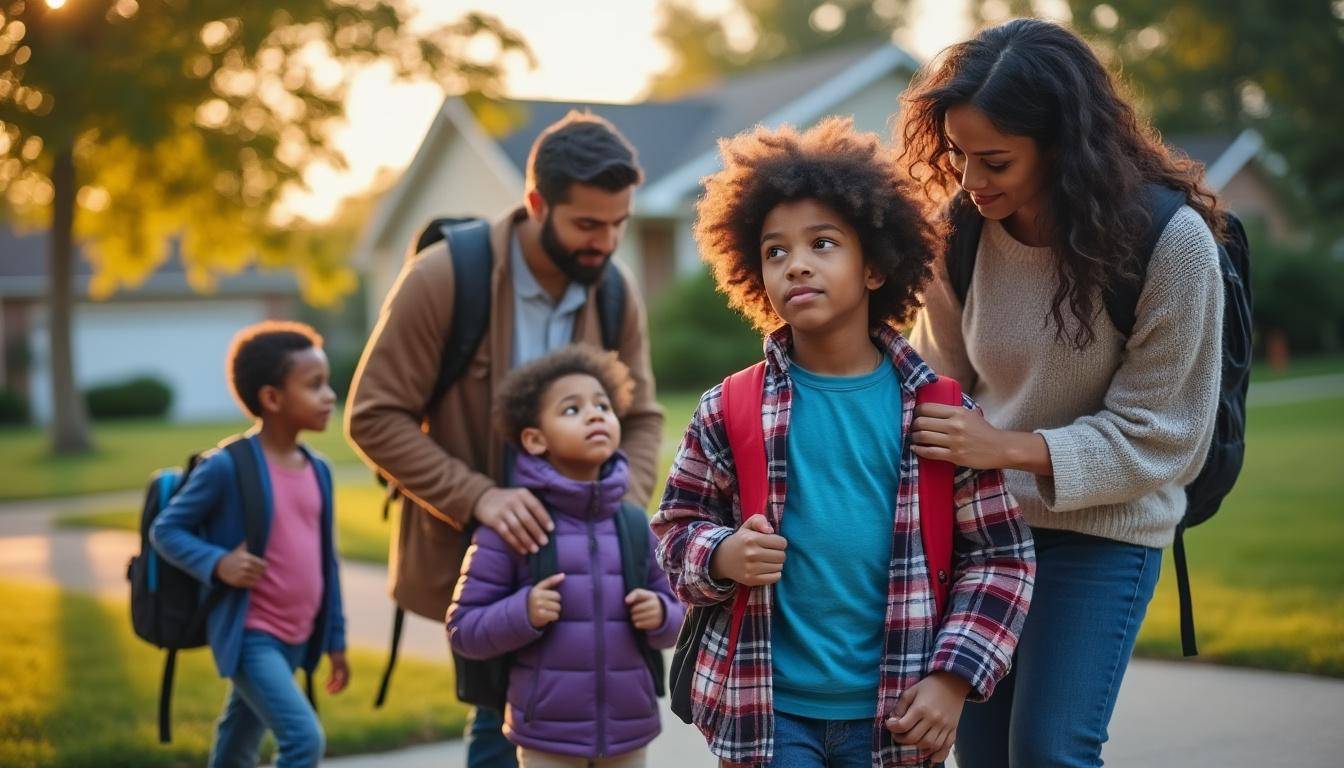
For many immigrant families in Minnesota, sending children to school has become a daily act of courage and a true leap of faith. Parents want safety, learning, and stability, yet they face fear of detention, language barriers, and deep financial stress. This guide explains how families, schools, and communities respond so children keep their right to education.
Immigrant families in Minnesota and the leap of faith of sending children to school
In Minnesota, thousands of children from immigrant families wake up each morning and wonder if it is safe to go to school. Parents look out the window, check the street, and weigh every risk before opening the door. For many, walking to the bus stop already feels like a leap of faith.
Families report federal officers near bus routes and school parking lots. Some parents and even young students have been detained on the way home. When this happens in front of classmates, the whole community feels the fear. Attendance drops, and trust in public spaces weakens.
Despite this, parents still push for access to education. They know school offers meals, language learning, and emotional support. The question they ask themselves each day is simple and heavy: “Is learning worth this risk today?”
Children’s daily reality between fear and education
Take the example of a 10-year-old boy in Minneapolis who still attends elementary school while his younger brother stays home. Each morning, he prays with his mother before the bus arrives. She scans the street for officers while he talks about soccer, music class, and his friends.
He loves school so much he saves part of his breakfast and lunch to bring home to his family. He wants to learn the flute next year and talks about his “too many” best friends. At the same time, his weight drops and his eyes show worry no child should carry. This contrast shows how education gives hope, yet fear shapes daily life.
In some classrooms, only a handful of students show up when almost thirty are enrolled. Teachers see empty chairs and break down in tears. They know each absence might not be simple illness but a sign of detention, hiding, or sudden relocation.
Access to education under immigration pressure in Minnesota
The legal right is clear. Every child, no matter immigration status, has the right to a public education in the United States. For years, schools and similar “sensitive places” such as hospitals and churches were considered off-limits for immigration enforcement.
Recent federal practices weakened this protection. In Minnesota, officers have appeared near school zones, close to arrival and dismissal times. Immigrant families no longer trust previous promises of safety. For many, the idea of a protected school zone feels broken.
District data shows how this pressure affects access to education. In St. Paul, over 9,000 students missed class on a single day in January, out of about 33,000. When families sense danger near campuses, they keep kids at home. For them, a missed lesson feels safer than a knock on the door of a detention center.
Online learning and emergency adaptations for immigrant families
To respond, some Minnesota districts introduced temporary online options. After children wrote to one superintendent saying “I don’t feel safe coming to school because of ICE,” the district opened virtual classes. Within the first 90 minutes, more than 3,500 students signed up, later rising above 7,500.
This rapid shift shows how quickly immigrant families adjust when they see any safer path to education. Online learning helps students keep up academically and stay in contact with teachers. It also reduces daily travel risks, which is central for parents under threat of detention.
Similar patterns appear in other states. For example, reports on ICE-related fear among children in Connecticut reveal the same mix of anxiety and urgent need for alternatives. Minnesota sits inside a wider national picture where families search for ways to keep learning without exposing themselves to harm.
Cultural adjustment and language barriers in Minnesota schools
Beyond legal fears, cultural adjustment shapes daily school life for immigrant families in Minnesota. Children arrive with different school experiences, traditions, and expectations from countries in Latin America, Africa, Asia, and elsewhere. They need time and guidance to understand new routines, grading systems, and classroom norms.
Language barriers intensify this challenge. Parents struggle to read letters from school, follow emails, or join conferences. Children often translate for adults, which adds pressure on them and blurs family roles. When you fear immigration enforcement, making a mistake on a form or missing a message feels even more dangerous.
Schools respond with interpreters, multilingual family liaisons, and translated materials. Some districts hire staff who share cultural backgrounds with families. This reduces misunderstanding and gives parents one trusted face inside the school system.
How language support improves access to education
When schools invest in language support, immigrant families feel invited instead of excluded. Clear translation of safety policies, attendance rules, and bus routes reassures parents who worry about what will happen to their children if officers appear nearby.
Stronger English as a Second Language programs help children move faster into grade-level content. This reduces frustration and drop-out risk. Targeted funding for ESL and bilingual support has long been debated, as seen in analyses of federal funding for ESL educators.
Each clear word, in any language, reinforces the message that school is a place for learning, not a trap. When language barriers fall, the leap of faith toward education feels smaller and more manageable.
Community support and shared responsibility for immigrant children
Community support in Minnesota plays a direct role in keeping immigrant children in school. Many families now rely on neighbors or volunteers to walk or drive their kids, believing white or citizen adults face lower risk of detention during school runs.
At one elementary school, about twenty teachers and a retired principal gather after dismissal to walk groups of children home. A family liaison organizes routes, hands out walkie-talkies, and reminds staff not to confront officers or film them. The goal is simple and clear: bring each child home safely.
On one walk, a girl heard car horns warning that immigration agents were nearby. She ran back to the adult leading the group and cried, “ICE is coming.” He took her hand and told her he shared her situation so she would not feel alone. Her body relaxed, and she finished the path with a smile. This kind of small, human interaction protects more than physical safety. It guards dignity.
Practical community support actions for immigrant families
Community support becomes stronger when it is organized and practical. If you live in Minnesota and want to help immigrant families keep their access to education, you can focus on specific actions.
- Offer safe transportation: Share rides to and from school, in coordination with parents and school staff.
- Volunteer as a walker: Join organized walking groups that escort children home in high-risk neighborhoods.
- Support translation: Help parents understand school messages, forms, and digital platforms.
- Join school-family committees: Advocate for safe pickup zones and clear policies on enforcement around campuses.
- Connect with local organizations: Partner with immigrant-rights groups, churches, or community centers that already support families.
When communities act together, schools stop being isolated buildings and become shared spaces of protection and learning.
Emotional health of children living between school and fear
Living with constant surveillance and uncertainty affects the emotional health of immigrant children. Many worry their parents will be gone when they return from school. Others hold back tears in class when they hear news about raids or detentions in their neighborhood.
Signs of stress include weight loss, sleep problems, sudden silence, or anger. Some children start hoarding food or small items from school because they fear shortages at home. When students talk about detention more than homework, the emotional cost becomes clear.
Teachers in Minnesota report crying when only a fraction of their class appears. They feel helpless, yet they also adapt by offering flexible meetings, teleconferences, and extra reassurance. A ten-minute walk home with a trusted adult becomes both a physical escort and an emotional bridge.
School strategies to support mental health and resilience
Schools help immigrant families when they treat mental health support as part of education, not an extra. Counselors, social workers, and trauma-informed teachers learn to recognize the signs of immigration-related stress and respond with care.
Simple routines strengthen resilience. Morning check-ins, quiet corners in classrooms, and small group circles give students safe spaces to talk. Partnerships with community clinics and legal aid groups also reduce family anxiety by connecting them to accurate information and resources.
Experiences in other states, such as reports about immigrant parents and education in Florida, confirm that strong mental health support improves attendance and learning outcomes. When a child feels believed and supported, their leap of faith toward school feels guided, not lonely.
Federal policies and the future of immigrant access to education
Behind every story from Minnesota lies a bigger debate about federal policy and immigrant families. Enforcement priorities, funding for public schools, and rules about “sensitive locations” all influence how safe parents feel when sending children to class.
Analyses of federal policies on immigrant access to education show how quickly rules shift from one administration to another. Changes in detention practices or school-zone guidance ripple into attendance data, teacher workloads, and family decisions.
Public discussions about school budgets and immigration enforcement will continue to shape Minnesota classrooms. Families, educators, and community leaders need clear, stable policies that protect the right to learn without forcing children to choose between safety and school.
What this means for you as a parent, educator, or ally
If you are a parent in Minnesota, you face complex choices each day. You weigh the importance of education against fear of detention and separation. You deserve clear information from your child’s school, safe transportation options, and access to legal guidance.
If you are an educator, your role goes beyond teaching content. You stand at the front line of children’s safety and dignity. Listening carefully, respecting family fears, and coordinating with community partners helps preserve both attendance and trust.
If you are an ally, you share responsibility for the well-being of immigrant children. Safe rides, translation help, advocacy at school board meetings, and support for fair policies all influence whether going to school remains a leap of faith or becomes a simple, safe part of childhood.