

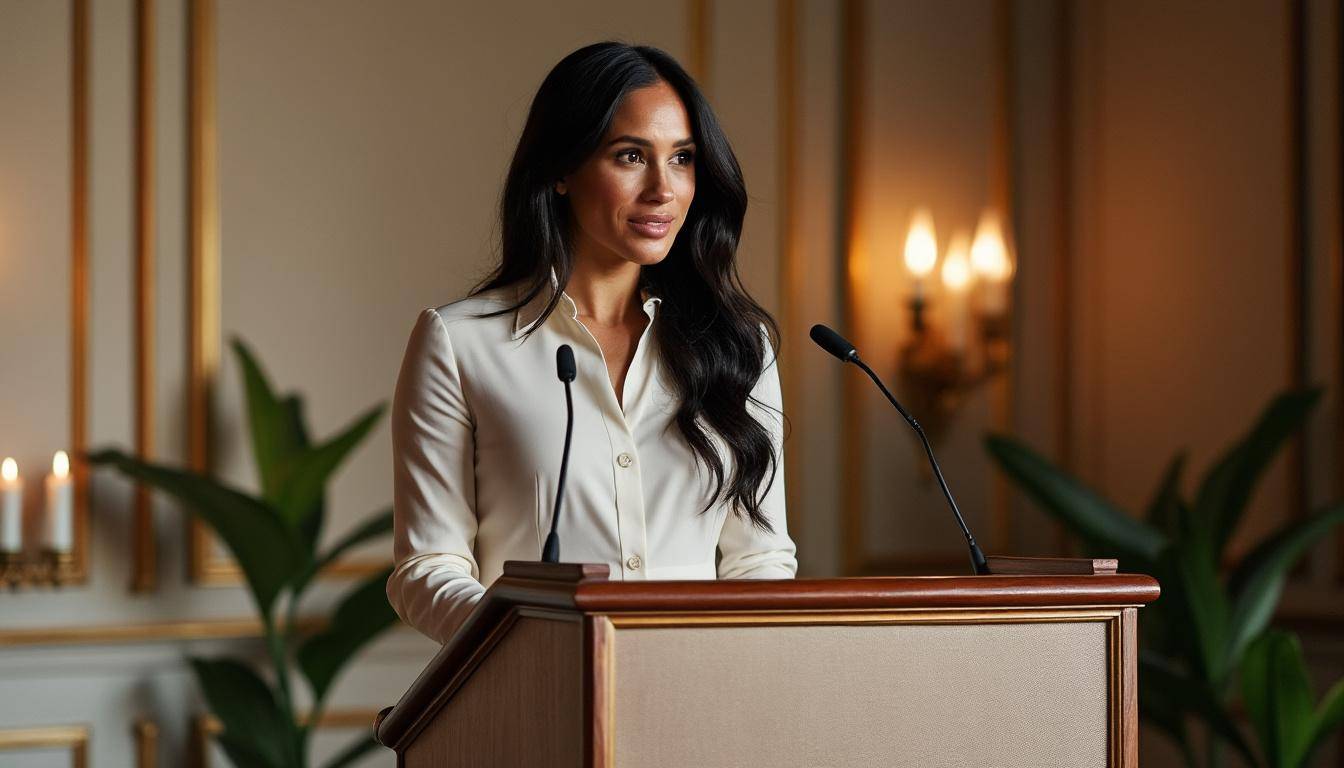
Meghan Markle faces fresh backlash after a recent appearance at a charity gala stirred debate over her public behavior and boundaries with a pregnant friend. The incident highlights how celebrity news, social media and public opinion shape the image of modern royals under constant media scrutiny.
Meghan Markle backlash after recent appearance at children’s rights gala
During a glamorous event in Beverly Hills, Meghan Markle attended the Alliance for Children’s Rights annual gala alongside her friend Kelly McKee Zajfen, a long-time advocate for vulnerable youth and co-founder of Alliance of Moms. The evening honored work that supports legal aid, education, safe housing and mentoring for children in care.
On the red carpet, cameras captured Meghan holding and caressing her friend’s baby bump while they posed for photographers. What looked like a tender gesture to some triggered a strong backlash from others, who saw this as controversial behavior during a high-profile recent appearance.
Why this celebrity news moment turned controversial
The images spread fast through social media and entertainment pages focused on celebrity news. A group of online critics called the touching “disturbing,” “inappropriate,” and “too intimate” for a public event with press present. Some compared it to ignoring standard media training about keeping the focus on the cause instead of personal gestures.
Others framed the scene as another example of Meghan “not listening to experts or data” on crisis management after weeks of negative headlines. Commenters argued a lower profile would have reduced media scrutiny, instead of a surprise gala appearance with heavy press coverage.
The clip of Meghan and Kelly did not remain limited to royal fans. It moved into wider debates about how public figures represent social causes, how they respect personal boundaries and how every movement becomes content in a 24/7 news cycle.
Public reaction, social media, and royal family media scrutiny
The public reaction to Meghan Markle showed a sharp divide. On Reddit, several users described the touching of the pregnant belly as “gross” and “tone deaf.” One poster went further, calling her a “nightmare PR client,” arguing she ignored the common advice to stay quiet when facing negative coverage.
On Instagram, the mood was different. Many praised the friendship, calling the moment “friendship goals” and describing Meghan as a “breath of fresh air.” Some users highlighted their long history of advocacy together, stressing that the warmth felt natural between close friends supporting a children’s charity.
This contrast mirrors a familiar pattern in royal family coverage. For years, Meghan’s role has sparked intense media scrutiny where the same action receives opposite interpretations. A hug looks authentic to one group and staged to another. In this case, the simple act of cradling a baby bump became a test of loyalty, values and expectations about modern royalty.
What the backlash reveals about modern celebrity culture
The backlash around this celebrity news story exposes wider tensions. Public figures face pressure to show empathy and connection, yet are criticized when physical affection feels too staged or intrusive. Many readers asked a simple question: would you touch a friend’s pregnant belly repeatedly in front of dozens of cameras at work?
Others noted that online anger often says as much about the audience as about the celebrity. When people feel frustrated with institutions, politics or inequality, it is easier to project that frustration onto familiar faces from the royal family, whose every move feels symbolic.
Education platforms that track reactions to sensitive topics, such as this analysis on child safeguarding backlash in public debates, show how strong emotional responses can drown out nuance and context when children’s welfare and public figures meet.
Boundaries, consent, and behavior in public settings
Beyond Meghan Markle herself, the scene raises useful questions for young people learning about respectful behavior. Touching a pregnant belly without clear consent often feels intrusive, even among relatives. Many commenters linked their criticism to their own experiences of unwanted touching during pregnancy.
In everyday school or community life, similar issues appear. Students sometimes hug classmates, grab shoulders or playfully push without asking. What looks harmless to one person feels stressful to another, especially under public attention. That tension is exactly what surfaced when Meghan’s gesture played out in front of global cameras.
- Ask before you touch: A simple “Is this okay?” protects relationships and personal comfort.
- Consider the setting: What feels fine in private might feel awkward on stage or in photos.
- Watch nonverbal cues: Step back if someone looks tense, freezes or shifts away.
- Respect different cultures: Norms about touch vary, especially in international or formal events.
- Link affection to support: Focus on what helps the other person feel safe, not what looks good on camera.
The key insight is simple: affection without clear consent, especially in a public setting, risks being read as controversial behavior, even if the intention was kind.
Teaching teens to read public opinion and media narratives
Teachers and parents who follow celebrity news with teenagers can turn this Meghan Markle story into a media literacy lesson. Students like our fictional high schooler, Alex, often scroll through royal headlines between classes without reflecting on how those stories shape their own idea of respect and success.
Working with a case like this, an educator might ask: Why do two groups see the same photo so differently? How does editing, captioning and headline choice change the emotional impact of the image? Linking to resources that explore how criticism builds around sensitive topics, such as this examination of public pressure on struggling schools, helps students see similar patterns of blame, defense and oversimplification.
When students learn to track public opinion and media scrutiny critically, they become less likely to copy unhealthy patterns they see in influencers or royals and more likely to think before sharing or commenting online.
From royal family drama to practical lessons on reputation
The Meghan Markle controversy also offers insight into reputation management for anyone in a leadership role. You do not need to be a duchess to experience criticism. Student council presidents, youth activists and even school principals face their own mini versions of backlash and public reaction inside their communities.
Consider how Alex, our fictional student, might apply lessons from Meghan’s recent appearance. If Alex faces criticism after a school event, it helps to pause and ask: Do my actions match my stated values? Did I listen to feedback from teachers, peers or mentors? Am I focusing on the cause, or am I pulling the attention toward myself in a way that distracts from the goal?
Public leaders in education often use structured communication channels, such as governor or district portals similar to those discussed in the context of Governor Phil Murphy’s digital portal, to align their message with their actions. Celebrities, including members of the royal family, face a higher-stakes version of the same challenge every time they appear in public.
Using celebrity news to build empathy and critical thinking
Educators often worry that celebrity news distracts students from learning. Used differently, stories about Meghan Markle, backlash, and controversial behavior provide rich material to foster empathy, ethical reflection and critical thinking about social media and public opinion.
In a classroom or at home, you might invite young people to reflect on three angles. First, personal boundaries: How would you want a friend to act around you in a public setting during pregnancy or other sensitive times? Second, media framing: How do headlines, comments and edited clips influence your emotional response to this recent appearance? Third, accountability: What responsibility does a public figure have to adjust their behavior once patterns of criticism become clear?
When students explore those questions calmly, they learn to move beyond quick outrage or blind defense. They gain skills to interpret every new royal headline as an opportunity to think, not only to react.