

The Need for STEM Education in the United States: How Orion STEM Schools Lead the Way
Across classrooms and communities, the demand for deep, applied learning in science, technology, engineering and mathematics has never been clearer. Employers and higher-education programs increasingly seek students who can think across disciplines, manage data, and collaborate on complex challenges. That gap between traditional instruction and future-ready skills is exactly where Orion STEM Academy positions itself.
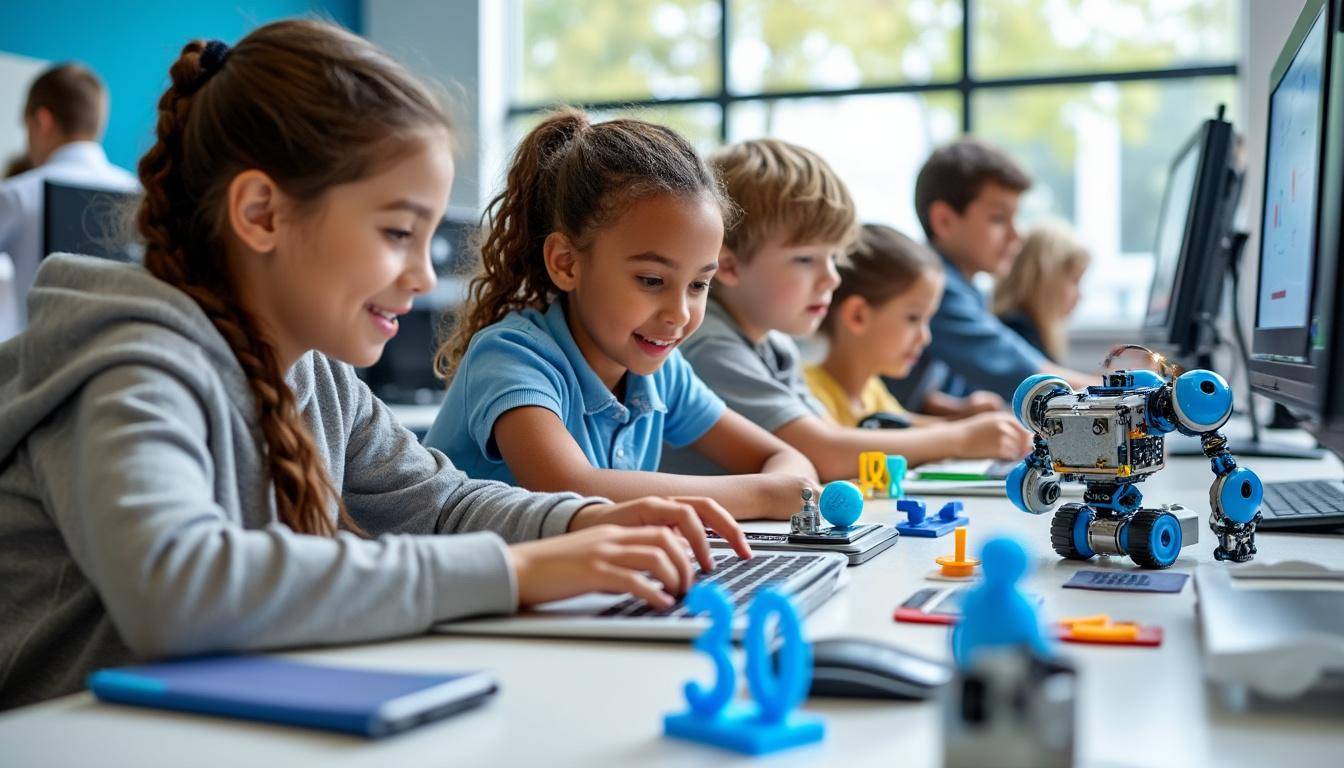
Consider a student named Maya, a curious fifth grader who loves building small robots after school. In many districts she might tinker at home, but at Orion STEM Academy she finds a structured pathway: rotating project modules, mentorship with industry partners, and classroom time intentionally longer to allow deeper inquiry. Those extra hours translate into richer portfolios and measurable confidence gains.
Why is this approach critical? Because education today needs to do more than convey facts; it must cultivate the capacity to solve novel problems. A STEM-centered program that is inquiry-driven brings together knowledge and practice, turning curiosity into competence. Partnerships with research universities and design labs accelerate this transformation by exposing students to authentic problem-solving frameworks.
Key drivers behind the need for scaled STEM efforts include rapid technological change and inequitable access to hands-on learning. When districts reallocate time and resources to experiential labs, students from historically under-resourced communities gain the same exposure to coding, data analysis and engineering design as their peers in well-funded schools.
- Evidence-based engagement: Inquiry-led lessons anchored to real-world problems increase retention and transfer of knowledge.
- Longer instructional blocks: Extended daily schedules allow for iteration, reflection, and collaborative critique.
- Workforce alignment: Early exposure to data science, medical science and consumer science builds pathways into emerging fields.
Several models adopted by trailblazing programs demonstrate measurable effects. For instance, a model that embeds project cycles with explicit reflection and rubrics shows greater gains in critical thinking than traditional worksheets. The inclusion of financial literacy and behavioral economics in earlier grades raises students’ ability to make informed decisions—an outcome directly tied to lifelong success.
Examples of organizations that support this direction include institutions that collaborate with K–8 innovators to design tiered curricula. These collaborations create a curriculum continuum that moves from foundational inquiry in primary grades to interdisciplinary capstone projects before middle school graduation. The result is a student body fluent in hypothesis testing, iterative design, and ethical reasoning.
Practical steps schools can take now include reallocating 30–60 minutes of daily time to hands-on labs, creating mentorship pipelines with local universities or businesses, and developing measurable performance tasks that mirror workplace expectations. Parents and communities play a role too: when families see the value of experiential STEM learning, they are more likely to advocate for policies and investments that expand access.
To learn how schools are aligning climate action and children’s education in public policy, resources like children’s education COP30 coverage show how national efforts are shaping local curricula. This context matters: STEM education does not exist in a vacuum but responds to workforce trends, civic needs, and global challenges.
List of essential benefits for students exposed early to high-quality STEM
- Improved problem-solving: Students learn to break complex problems into manageable steps.
- Career exploration: Early exposure demystifies technical fields and sparks pathways.
- Equity gains: Hands-on access levels opportunity across demographics.
Insight: Investing in inquiry-based STEM curricula with intentional partnerships produces learners who are not only knowledgeable but capable of applying that knowledge to unfamiliar challenges.
What Sets Orion STEM Schools Apart: Innovation, Entrepreneurship, and Leadership in K-8 Education
Orion’s approach extends beyond conventional STEM content. The school intentionally blends technical learning with entrepreneurial habits and character development, producing a hybrid model that nurtures both analytic skills and initiative. The founder’s vision—championed by Selvei Rajkumar in early implementations—was to create a learning environment where students explore ideas, test them rapidly, and iterate with feedback.
At the classroom level, the day is deliberately structured. Learners rotate through modules such as medical science, consumer science (which integrates financial literacy and behavioral economics), and data science alongside core literacy and numeracy instruction. These rotations are not isolated; they are designed to intersect via integrated projects that demonstrate how one discipline informs another.
To understand the difference, imagine a project where students design a low-cost water filtration prototype. In that unit, they apply chemistry concepts (medical science fundamentals), analyze usage data (data science), and plan a sustainable budget and outreach strategy (consumer science and entrepreneurship). That multi-angle exposure creates robust problem solvers.
- Integrated rotations: Cross-disciplinary blocks that connect theory to practice.
- Extended exploration time: A school day longer by an hour than many public counterparts preserves depth.
- Entrepreneurial labs: Students learn pitch-writing, prototype testing, and user-centered design.
Pedagogically, Orion emphasizes design thinking and reflective practice. Students document hypotheses, run experiments, gather feedback from peers and community mentors, and iterate. Teachers act as facilitators and coaches rather than merely deliverers of content. This shift fosters autonomy and resilience.
Another distinctive feature is the incorporation of social-emotional learning into the tech and engineering curriculum. Projects include structured reflection on teamwork, ethics, and community impact. For example, a middle-grade team that works on a community garden sensor system must consider not only sensor calibration but also consent, data privacy, and equitable benefit-sharing with neighbors.
Partnerships enrich the program. Collaborations with research centers and design institutes supply teacher professional development and provide real challenges for students to solve. Schools that integrate external mentorship report stronger project outcomes and greater student persistence in STEM pathways.
Practical strategies for school leaders who want to replicate aspects of this model include recruiting teachers with blended skills, restructuring schedules to include one longer project block per week, and creating local advisory boards to link classroom work to community needs.
List of launch priorities for school administrators
- Adjust schedules: Create blocks for deep dives and iterative projects.
- Build partnerships: Align with universities, nonprofits, and industry mentors.
- Invest in teacher PD: Focus on facilitation, design thinking and assessments for performance tasks.
Insight: When STEM instruction is coupled with entrepreneurship and reflective practice, students develop a mindset that is both creative and accountable—ready to lead initiatives that matter.
Orion STEM Schools Integrates Innovation, Entrepreneurship, and Global Partnerships
Global partnerships are an intentional element of Orion’s strategy. By collaborating with institutions renowned for research and pedagogy, the schools import high-quality frameworks and adapt them to local contexts. Notable collaborators include university-based STEM education groups and design labs that help craft inquiry sequences and teacher training.
These collaborations result in curricula that are globally informed yet locally relevant. For example, a community with a strong agricultural economy might pivot a data science module toward sensor networks and yield analytics, while a coastal district might center projects on marine conservation technologies. The core skills—data literacy, engineering design, and ethical reasoning—remain constant.
Case study: In a coastal city partnership, Orion learners worked with a university lab to monitor local water quality. Students collected samples, analyzed data, and created a public dashboard. The project taught coding, chemistry and public communication. The community partner used the student-generated data to inform a small municipal policy change—a real-world impact that deepened student agency.
- University partnerships: Provide curriculum expertise and evaluation support.
- Industry mentorship: Offers relevance and potential career pipelines.
- Global networks: Enable comparative study and cultural exchange projects.
Orion’s network also includes collaborations with philanthropic initiatives that fund innovation in schools. For instance, community investments have underwritten makerspaces and teacher residencies. Partnerships like these demonstrate how public-private collaboration can accelerate equitable access to advanced learning experiences.
Teachers report that external collaboration increases students’ motivation; knowing that their work informs real stakeholders raises the stakes and the quality of deliverables. From a professional-development perspective, exposure to university researchers keeps instruction current with the latest pedagogical evidence.
To scale responsibly, Orion focuses on building local capacity. Instead of exporting turnkey solutions, the model trains local educators to adapt frameworks. This approach fosters sustainability and reduces reliance on short-term grants.
A resource that helps frame how institutions can use technology thoughtfully in schools is available in discussions about the AI transformation of learning. Educators are encouraged to review content like how AI can revolutionize education to understand potential applications and ethical safeguards.
Example list of scalable partnership practices
- Co-design projects: Jointly develop projects with community partners and teachers.
- Mutual PD: Exchange professional development so partners learn from classroom realities.
- Data-sharing agreements: Ensure student privacy while enabling evaluation and improvement.
Insight: Global and local partnerships, when centered on co-design and capacity building, turn ambitious educational visions into sustainable reality.
After watching a showcase video, educators often return to practice with new ideas and a deeper sense of possibility.
Preparing Students for the Jobs of Tomorrow: Practical Skills, Ethics, and Career Pathways
Preparing students for future careers requires blending technical skills with ethical frameworks and career exposure. Orion’s curriculum includes deliberate career mapping from an early age: students learn what different roles require, try mini-internships or mentor sessions, and develop portfolios that demonstrate applied competence.
For example, a middle schooler curious about biomedical engineering might progress through a sequence of units: basic life sciences, instrumentation labs, data analysis, and an entrepreneurship module where they design a health-related device and propose a deployment plan. Each step incorporates ethical reflection about equity, consent and safety.
Schools that adopt this approach report higher student intent to pursue STEM careers and greater clarity about postsecondary options. Portfolios and capstone projects become tangible evidence for high school admissions, apprenticeships, and early employer engagement.
- Career exposure: Regular interactions with professionals and site visits demystify pathways.
- Portfolio development: Students curate work that demonstrates iterative problem-solving.
- Ethics integration: Class projects include explicit discussion of societal impacts.
Orion also embeds civic responsibility into project choices, encouraging students to select problems that matter to their towns. This localized focus opens doors to municipal internships and community partnerships that value student contributions.
To scale equitable opportunities, Orion’s leadership cultivates industry relationships that intentionally recruit diverse talent into paid summer internships and micro-apprenticeships. These placements help bridge the experience gap that often prevents students from pursuing technical majors or careers.
Families are invited into the process through targeted dialogues that explain career tracks and how classroom choices map to future options. Resources such as parental engagement studies provide useful context; one example resource on parental attitudes is available at parents’ optimism about education, which highlights how informed families become advocates for deeper learning.
Practical guideposts for schools seeking to enhance career readiness
- Map competencies: Align K–8 tasks to middle- and high-school standards and workforce skills.
- Create micro-internships: Partner with local organizations for short, paid experiences.
- Build ethical literacy: Integrate case studies on technology, privacy and social impact.
To illustrate impact, a student named Arjun completed a community health sensor project, earned a summer placement with a local biotech firm, and later received a scholarship to a summer research program—an arc that began with structured exposure in middle school.
Insight: When schools combine hands-on technical instruction with career exposure and ethics, students are better prepared not only to enter the workforce but to shape it responsibly.
After watching presentations and reflection videos, students often refine their pitches and adjust prototypes based on feedback.
Scaling Impact: Community Engagement, Inclusion, and Opportunities for Diverse Learners
Scaling a high-quality model requires an inclusion strategy that centers diverse learners—those experiencing homelessness, students with special educational needs, and communities with limited access to enrichment. Orion prioritizes adaptive supports and community coordination to ensure that innovation benefits all students.
Practical inclusion strategies include wraparound services, tailored scaffolding in project work, and partnerships with social service providers. Outreach to families and community organizations helps identify barriers early and design solutions that make participation feasible. For students experiencing housing instability, for instance, flexible schedules and loaner technology can be decisive.
Programs targeted at vulnerable populations often need alignment with service organizations. Evidence-based resources that explore STEM education for homeless youth provide guidance on policy and practice; educators and leaders can consult materials like STEM education for homeless youth for concrete strategies.
- Accessible design: Universal Design for Learning (UDL) principles make activities approachable for a range of learners.
- Targeted partnerships: Collaborations with health and social services reduce non-academic barriers.
- Teacher training: Ongoing PD on differentiated instruction and assistive technologies supports inclusion.
Children with special educational needs benefit when STEM learning includes multiple access points. A circuit-building lesson can be modified with tactile manipulatives, visual supports, and stepwise tasks. Teachers trained in adaptive strategies report higher engagement and stronger mastery among diverse learners.
Grant-funded initiatives and community donations also help scale equity. Philanthropic programs—illustrated by examples of corporate support for education and sports programs—show how partnerships can fund essential resources; see coverage of corporate contributions to education at corporate-sponsored education initiatives. Local community efforts amplify impact when they co-design solutions with families and neighborhood leaders.
International collaboration supports equity too. Programs that bring global exchanges to mind, like an educational opportunity partnership in Cameroon, can inspire culturally responsive curricula—details on such initiatives can be found at Kennesaw educational opportunities in Cameroon. These cross-cultural connections broaden students’ perspectives and foster global citizenship.
For schools looking to deepen inclusion, a practical checklist:
- Conduct needs assessments: Map non-academic barriers that affect participation.
- Design flexible programming: Offer multiple entry points, asynchronous options, and community hubs.
- Secure partnerships: Align with local nonprofits, health providers and parent organizations for wraparound support.
One anecdote: a small urban site partnered with a local children’s center to host after-school makerspaces, providing hot meals and transport assistance. Students who attended consistently displayed improved attendance and deeper project outcomes, demonstrating the power of coordinated supports.
Insight: Equity-driven scaling requires systems thinking—aligning curriculum, partnerships and family supports so that innovation reaches and uplifts every learner.