
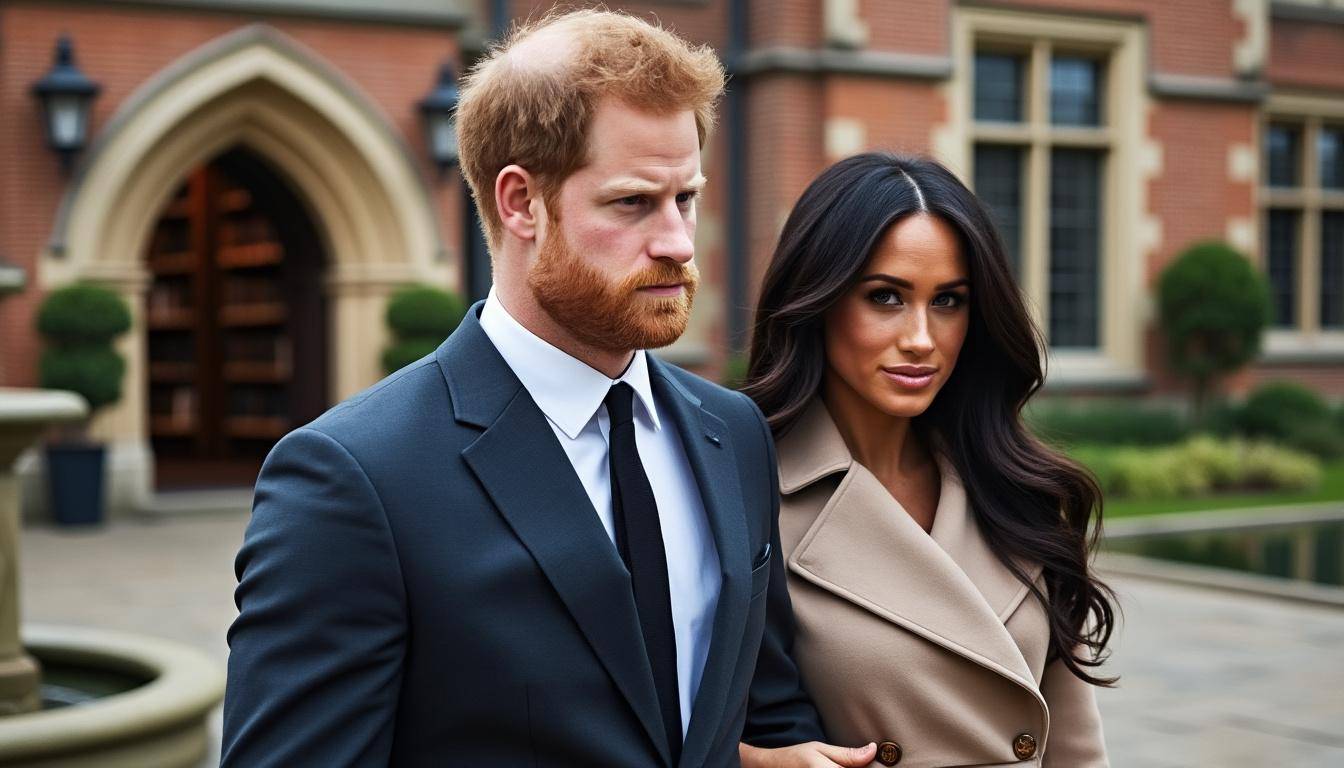
Prince Harry and Meghan Markle are back in the spotlight after a reported snub during their humanitarian visit to Jordan, with royal insiders speaking of quiet disappointment behind the scenes despite their focus on aid work.
Prince Harry and Meghan snub in Jordan: what happened
During a recent trip to Amman, Prince Harry and Meghan Markle followed a packed humanitarian schedule. They met health officials, aid partners and young people involved in refugee projects.
Yet the visit drew global celebrity news attention for one striking detail. No formal meetings were arranged between the couple and Jordan’s senior royal family, despite long-standing ties between the Jordanian and British monarchies.
Local sources described the situation as a quiet snub. Commentators say this absence of palace meetings fed a sense of disappointment for the Sussexes, who often structure trips in a way that looks similar to official royal tours.
Disappointment and allegation of a deliberate royal snub
Reports speak of an allegation that the lack of a royal audience went beyond simple timing issues. While Prince Harry and Meghan Markle met Princess Basma Bint Talal at a development visit, they did not see King Abdullah II or Crown Prince Hussein.
On the same day, Abdullah met the Indonesian president and held talks with WHO director Tedros Adhanom Ghebreyesus. Official photos showed those meetings without the Sussexes, even though their Archewell Foundation partners with the WHO on health projects.
For observers used to images of senior royals standing together at such events, the contrast looked sharp. This feeds the narrative of a public snub and a quiet sense of disappointment inside the couple’s relationship with global royal households.
How the Jordan visit mirrors past royal family snub stories
The Jordan trip follows a pattern that fans of celebrity news recognise. Previous reports spoke of Christmas speeches where photos of the Sussexes did not appear, or events where they felt pushed to the side of the royal family stage.
This history shapes how people read the latest allegation of a snub. Even when the couple highlights children’s health or refugee education, headlines still focus on perceived personal slights and public reaction.
The result is a repeated storyline in which humanitarian action competes with royal drama. You see a visit set up to talk about health, learning and youth support, yet attention drifts back to who did or did not appear in photos together.
Public reaction and media coverage around Meghan Markle and Prince Harry
Media coverage of the Jordan trip split into two tracks. One focused on clinics, refugee camps and youth centers. The other magnified talk of a quiet snub by Jordanian royals and the couple’s alleged disappointment.
Readers tend to fall into three groups when they react to Prince Harry and Meghan Markle stories. Some see them as victims of ongoing cold shoulders from the wider royal family. Others think they seek these moments to stay in the news. A third group wants less drama and more detail on the aid work itself.
This divided public reaction keeps every new allegation alive longer than a normal diplomatic scheduling issue. For students studying media or politics, it offers a textbook case of how personal narratives shape foreign trips.
What Prince Harry and Meghan did on the ground in Jordan
Behind the headlines about a reported snub, the couple’s schedule in Jordan focused on health, learning and refugee support. At the invitation of Dr. Tedros, they took part in a roundtable at the British ambassador’s residence with WHO and UN representatives.
They then travelled north to Za’atari Refugee Camp, one of the region’s largest communities for displaced families. Their programme highlighted education, psychosocial support and community life for children who grew up far from their original homes.
For many of these young people, chances to study, play sports and express themselves through art give structure and hope. That core focus on learning often receives less media coverage than any royal snub, even though it shapes lives for years.
Real impact: from football games to youth workshops
At Za’atari, Prince Harry and Meghan Markle visited a youth centre run by Questscope. The centre hosts art, music and sports projects that give teenagers a sense of safety and routine.
The couple joined a football match, watched music sessions with traditional Arabic instruments and spoke with teenagers working on creative projects. These are not symbolic gestures. Young people in similar programmes report better emotional health, stronger friendships and higher motivation to keep studying.
For readers interested in education policy, this mirrors wider debates about learning as a long-term support for children in crisis. You see similar questions in analyses of early learning and child care funding, where decision makers weigh short-term budgets against long-term social outcomes.
Diplomatic questions and the British ambassador’s role
The Jordan visit also raised political questions in London. Former Conservative minister Tim Loughton criticised the role of the British ambassador, who hosted the couple at his official residence and praised their support for UN and WHO efforts.
Loughton argued that Prince Harry and Meghan Markle, as non-working royals, do not represent the UK government. In his view, giving them an official platform risks blurring lines between personal advocacy and state policy.
This debate matters for students of international relations. It shows how a reported royal snub connects with questions about who speaks for a country, who gains diplomatic visibility and how media coverage frames those choices for a global audience.
Royal family ties and why a missing meeting draws attention
The reaction to the Jordanian snub also depends on history. King Abdullah II has long maintained warm ties with the British royal family. He has appeared at key events in London, including the coronation of King Charles III, while Queen Rania has held meetings with Queen Camilla on women’s issues.
Crown Prince Hussein has also developed a friendly rapport with Prince William, from joint visits at RAF Benson to watching World Cup matches together. William and Catherine attended Hussein’s wedding, underlining the close link between the households.
In that context, the absence of a meeting with Prince Harry and Meghan Markle looks stronger than a simple diary clash. For some observers, it strengthens the allegation of a deliberate snub. For others, it signals how their relationship with traditional royal networks keeps shifting.
What this royal snub story teaches about media, education and critical thinking
Stories about Prince Harry, Meghan Markle, disappointment and every new snub attract clicks. Yet they also offer a chance to teach young readers how to read complex celebrity news with a critical eye.
Teachers and parents often use these events as live case studies. Students look at who speaks, who stays silent and how headlines frame each new allegation. They compare coverage from different outlets and ask what parts of the visit receive less attention.
This approach connects with wider questions about how learning shapes agency and voice. For a broader view of this topic, you might explore how structured learning environments help students take control of narratives in their own lives, as discussed in this article on how learning empowers students.
Practical ways to study the Prince Harry and Meghan Markle coverage
If you guide students or your own children through media coverage of the latest royal family drama, structure the discussion with clear steps. Use the Jordan trip as a concrete case.
- Identify the main claim: Is the focus on humanitarian work or on the alleged snub and disappointment of Prince Harry and Meghan Markle?
- Check the sources: Who uses the word “snub”? Insiders, named officials or unnamed “friends” of the couple?
- Separate fact from interpretation: A missed meeting is a fact. Calling it a deliberate rejection is an allegation.
- Compare outlets: How does a tabloid frame the story compared with a public broadcaster or an international paper?
- Look for missing voices: Do you hear from refugees, health staff or teachers, or only from royal commentators?
- Discuss impact: How might this coverage shape the couple’s relationship with institutions, and how might it affect support for the causes they highlight?
This method turns a short-lived celebrity news cycle into a lasting lesson about analysis, empathy and evidence.
From royal disappointment to long-term opportunities for young people
Behind every headline about a royal snub lies a deeper story about children, learning and opportunity. When Prince Harry and Meghan Markle visit places like Za’atari, they draw attention to education gaps for displaced young people.
Similar gaps exist in many communities far from Jordan. Access to scholarships, early education and safe learning spaces often depends on policy choices and local advocacy. You see parallel issues in reports on projects such as private scholarship programmes for low-income students or community-led schools.
For example, discussions about targeted aid, like those highlighted in some private scholarship initiatives, show how focused funding changes outcomes for learners who face barriers from the start, in ways similar to the challenges refugee teenagers face. Case studies like the Badger Institute private scholarship work offer another angle on how structured support reshapes life chances beyond any temporary media storm.