

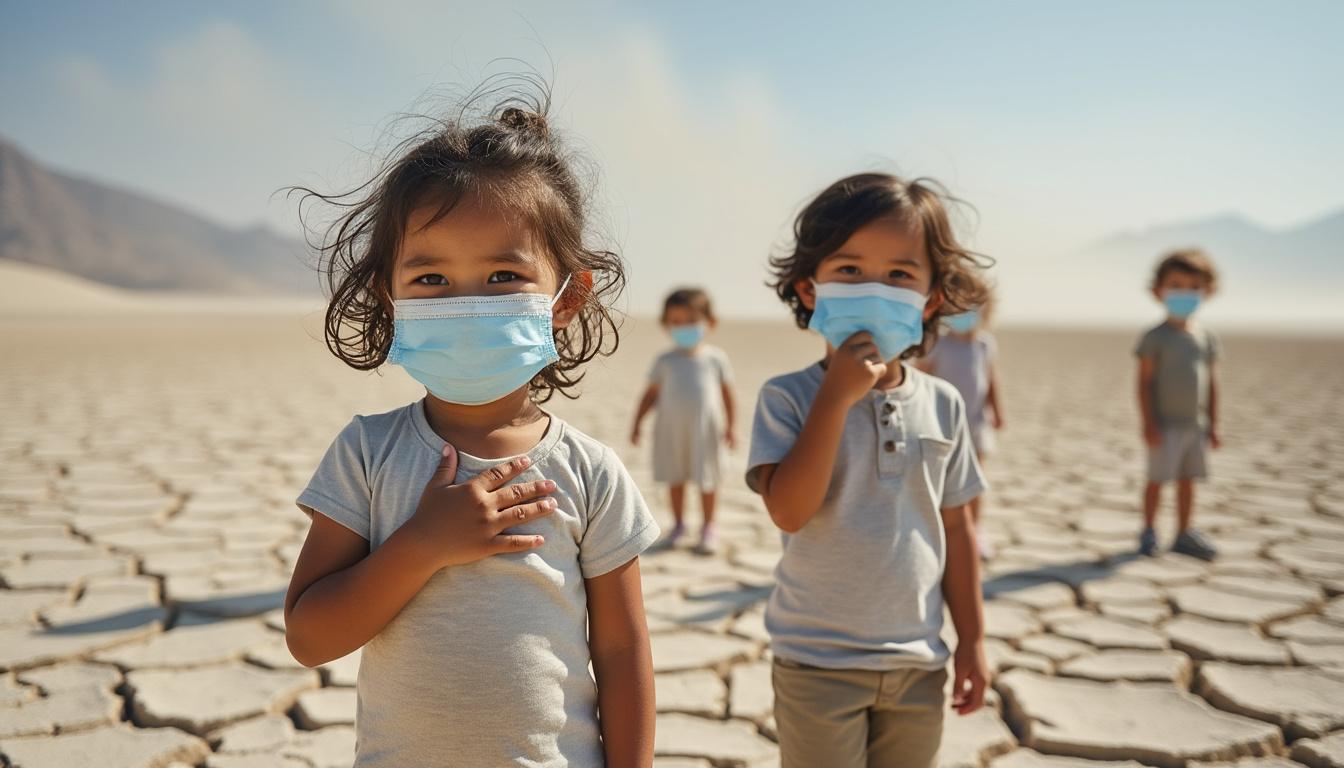
Hazardous Dust from the Salton Sea has become a growing Public Health crisis in California. New research shows a clear link between wind-blown dust from the drying lakebed and rising Lung Risks for children in Imperial Valley. The concern is not abstract. It affects daily breathing, school attendance, sleep, and long-term Children’s Health.
Hazardous Dust at the Salton Sea threatens children’s health
The Salton Sea once drew tourists, boaters, and families to Southern California. In the 1950s and 1960s, it was known for beaches and leisure. Today, much of that image is gone. The shoreline has pulled back, the exposed ground has spread, and Hazardous Dust now defines the area more than recreation.
This shrinking lake is California’s largest inland sea, covering more than 340 square miles at its fuller stage. Over recent decades, drought, water transfers, and climate pressure have reduced inflow. As the water retreats, dry lakebed becomes exposed. That exposed soil carries salts, farm chemicals, and metals left behind over many years. When strong desert winds hit, those materials rise into the air as Toxic Particulates. This is the core Environmental Hazard.
For families living nearby, the issue is simple and severe. Dust in the air enters homes, schoolyards, and lungs. The main lesson is clear: a drying lake has turned into a direct air threat for children.
Why the Salton Sea creates more air pollution
The Salton Sea exists because of an early 1900s canal break tied to Colorado River water. For decades, farm runoff helped sustain it. That runoff also carried fertilizers, pesticides, salt, and toxic metals into the lake. Over time, these pollutants settled into the sediment.
Then water inflow dropped. A major 2003 water transfer deal led Imperial County’s irrigation district to send far less water toward the sea, with the full effect taking hold in 2018. The result was a rapid expansion of dry playa. Estimates linked this shift to an extra 40 to 80 tons of wind-blown dust per day. Satellite tracking has shown thousands of acres of newly exposed lakebed.
This matters because the sea sits in a hot, dry, windy basin about 235 feet below sea level. In such conditions, exposed sediment does not stay still. It moves into nearby communities. This is why Air Pollution around the sea is not one source among many. It is a worsening local driver of illness.
You can see the link between dust and health in the daily lives of children who live close to the shore. That evidence becomes stronger in formal research.
Salton Sea research links hazardous dust to lung risks
Researchers from the University of Southern California and the University of California, Irvine followed more than 700 elementary school children in five northern Imperial Valley cities through the AIRE cohort study. The team tracked breathing symptoms, measured lung function, and reviewed household and behavioral factors over several years. This gave the study depth, not a one-time snapshot.
The findings were direct. Children with higher exposure to dust, especially those living nearest the Salton Sea, showed poorer lung function and slower lung growth over time. These effects were strong enough to raise alarm beyond local concern. In some cases, the harm observed near the sea exceeded patterns seen in urban California communities near heavy traffic.
Lung Risks in childhood matter because lungs continue to develop through adolescence. If growth is reduced early, the impact can stay with a person into adult life. The key point is not only current coughing or wheezing. It is lasting damage.
What the child health data shows
One striking result stands out. Nearly 1 in 5 children in the studied northern Imperial Valley communities were reported to have asthma. This level is far above the national average. It supports what local parents and teachers have said for years.
The research also found broader harm. Children without asthma still faced more coughing, wheezing, and breathing trouble when Air Pollution levels were higher. So this is not only an asthma story. It is a wider Children’s Health issue tied to chronic dust exposure.
Think of a student like Elena, a fictional ninth grader in Imperial Valley. She plays outside after school, walks between classes, and sleeps with windows closed during dusty periods. If her lung growth slows year after year, the effect does not disappear when the dust settles. That is why this evidence carries weight for parents, schools, and health planners.
Children face stronger exposure than adults for physical reasons, and this helps explain the scale of the problem.
Why hazardous dust creates stronger respiratory issues in children
Children breathe faster than adults. Their lungs and immune systems are still developing. They also spend more time outdoors during play, sports, and school activity. Each of these factors raises their exposure to Toxic Particulates.
When polluted dust reaches the lower airways, it irritates tissue and can affect lung development. Over time, repeated inflammation raises the chance of chronic Respiratory Issues. Later in life, reduced lung function is linked with diseases such as COPD and with more frequent infections, including pneumonia.
This is why Hazardous Dust should not be viewed as a short-term nuisance. For children, it can shape health across decades. The science points to early protection as the smart response.
Daily signs families should not ignore
Parents and educators near the Salton Sea often notice patterns before a formal diagnosis. Dust events can line up with harder nights, missed school, and more inhaler use. These signs deserve attention, especially in children living close to exposed shoreline areas.
- Frequent coughing after outdoor play
- Wheezing during the night or early morning
- Shortness of breath during sports or recess
- Sleep disruption on windy days
- More asthma flare-ups and clinic visits
- Reduced exercise tolerance over time
If you see these patterns, connect them to local air conditions, not only to seasonal colds. This shift in thinking helps families act earlier.
California public health response around the Salton Sea
The Public Health challenge is sharpened by inequality. Many communities south of the Salton Sea are low-income and largely Latino. Residents have said for years that their neighborhoods were left out of major decisions about water policy and environmental cleanup. The new evidence supports those concerns with measured health data.
Local groups such as Comité Cívico del Valle have played a major role in pushing for monitoring, medical support, and dust control. Their work shows a practical truth. Communities often identify a health crisis long before institutions respond at full scale.
In 2026, this issue also intersects with future industrial plans, including lithium extraction around the region. Economic growth brings attention, but it also raises pressure on land, air, and water management. If planning ignores air quality, the burden on children will grow. That is the central policy test.
Steps schools, parents, and local leaders should take
You do not need to wait for a perfect statewide fix before taking action. Several steps reduce exposure and support better Children’s Health in areas facing Hazardous Dust.
- Track local air conditions daily and limit outdoor activity during dust events.
- Improve school air filtration so classrooms stay safer on high-wind days.
- Expand asthma screening for students with repeat symptoms.
- Teach families how to manage inhalers and action plans before flare-ups happen.
- Fund dust suppression projects on exposed playa near homes and schools.
- Review new industrial permits through a child health lens, not only through economic targets.
These actions will not solve the full Environmental Hazard, but they reduce harm while larger restoration and water decisions move forward. The most useful insight is plain: every delay leaves children breathing the cost.