

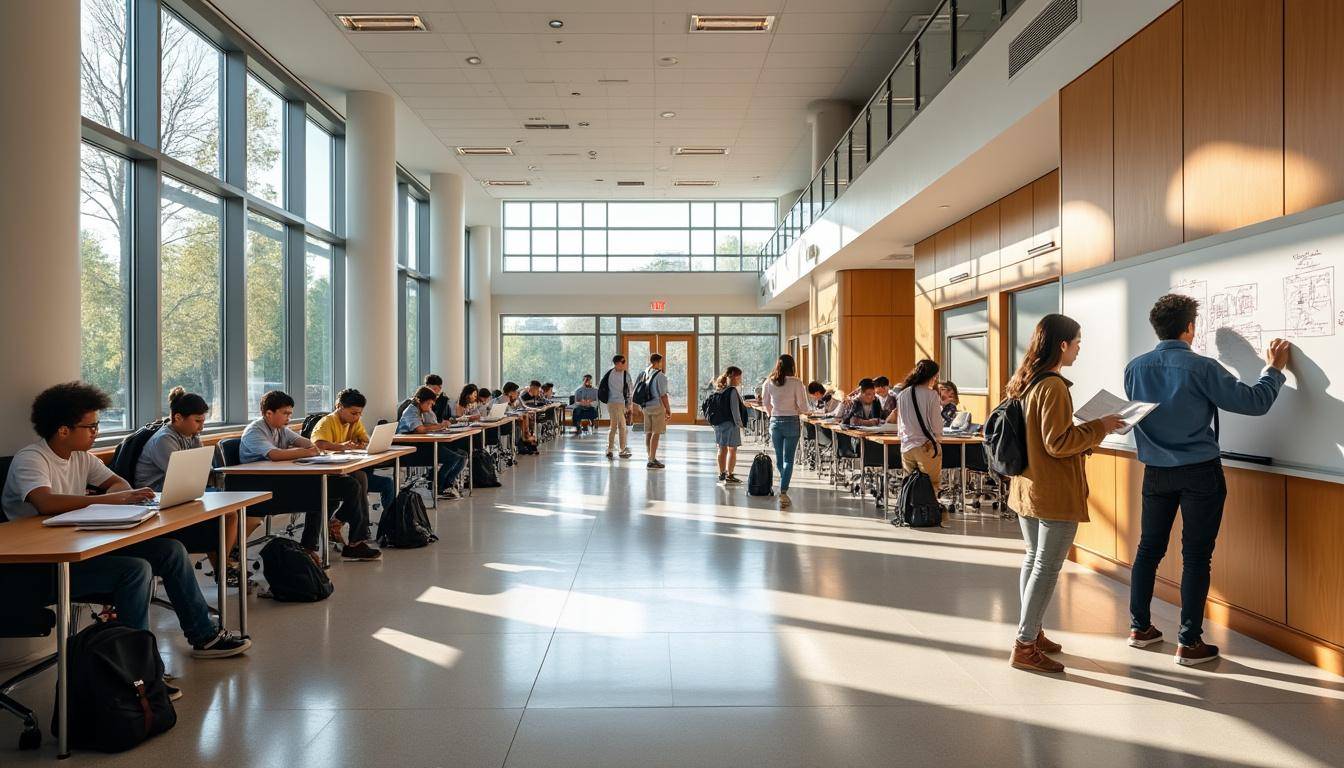
You step inside a school where learning never stops. No long breaks, no long gaps, only a rhythm of study, practice, feedback, and rest that repeats all year. This is what a nonstop school looks like from the inside.
Inside the school that never takes a break: how nonstop learning works
In this type of school, the whole education model is built on continuous learning. Students move through the curriculum in shorter cycles, with regular pauses for recovery instead of a single long summer break.
The director, Mr. Lee, explains it in simple terms to new parents: “We do not make children learn more. We spread learning better.” That single idea shapes every part of the school day and year.
A nonstop school calendar with real rest built in
Inside this school that never takes a break, the year runs on a 45/15 pattern. Students study for 9 weeks, then rest for 3. Four times per year. No one disappears from the classroom for months, and learning loss stays low.
Teachers use the short breaks with purpose. Some periods focus on intervention for learners who struggle with reading or math. Others open enrichment clubs for robotics, drama, or coding. Families plan travel in these 3‑week windows, which reduces tension around term-time holidays.
Researchers who study schools without long summer breaks in countries like South Korea show how continuous study keeps skills fresh. A similar effect appears in this school, but with structured rest instead of endless cram sessions. You see fewer “September resets” and more steady progress.
Students inside a nonstop learning environment
For students, nonstop education does not mean non-stop pressure. It means the school treats learning like a daily habit instead of a sprint followed by a long pause. The rhythm feels closer to how adults work and live.
Meet Sara, a 13‑year‑old who joined after struggling in a traditional middle school. Long holidays broke her focus, and each new term felt like starting from zero. In this new setting, her reading level climbed by two grades in one year, with the help of small group tutoring every break cycle.
How continuous school learning shapes daily habits
Inside the nonstop school, days are shorter but more focused. Instead of long lectures, teachers mix 20‑minute instruction blocks with quick practice and reflection. This pattern respects how the brain holds attention.
Every student keeps a “learning log.” After each lesson they write two lines: what they understood and what still feels unclear. Teachers review these logs daily, adjust their plan, and invite a few students to a small clinic the next morning.
- Morning: core subjects such as math, science, and language
- Midday: labs, projects, and group work
- Afternoon: art, sports, and mentoring sessions
This steady routine builds strong study habits without long late‑night homework sessions. Students leave school tired but not exhausted, ready to repeat the cycle the next day.
Teachers in a school where learning is nonstop
Teachers often fear that a nonstop school schedule will burn them out. Inside this school, the opposite happens because leadership protects teacher time as much as student time.
Each 9‑week term ends with a 3‑day pause for staff before students start their break activities. Teachers meet, review data, redesign parts of the curriculum, and share what worked. Then they take their own rest days while tutors and community partners run optional programs.
Professional learning that mirrors continuous student learning
Staff development in this nonstop school follows the same pattern of small, regular steps. Instead of one huge training day per year, teachers receive weekly coaching cycles. Each week they try one new technique, record a short clip of their classroom, and discuss it with a colleague.
This approach draws lessons from systems that combine academic and personal development, such as schools that focus on both intellect and spiritual growth. An example is described in this article on whole‑child schools, where reflection and purpose sit next to exam prep.
When teachers grow in small, frequent steps, students feel it in the quality of lessons. Instruction becomes tighter, expectations clearer, and feedback faster. The nonstop rhythm supports adults and children at the same time.
Inside the classroom that never stops learning
If you stand in the back of one of these rooms, you do not see students listening in silence for an hour. You see short, sharp cycles that keep everyone engaged. The nonstop school model rewrites what “time on task” looks like.
Each lesson follows three questions: What are we learning, how will we know we learned it, and what do we do if we did not learn it yet. Students know these questions by heart, and they refer back to them all day.
Brain breaks and focus in a continuous learning school
Nonstop learning does not mean no breaks during the day. Short “brain breaks” prevent fatigue before it appears. Every 25 minutes, students stand up, stretch, talk for one minute, or do a quick problem on the board.
Neurologists and classroom teachers point out that breaks before boredom maintain focus far better than long sessions of forced attention. This school takes that research seriously. As a result, you see fewer discipline issues and more on‑task behavior across the year.
The message to students is simple: your brain needs movement and pause in order to study well. Rest is part of serious learning, not a reward after it.
Curriculum design inside a nonstop school model
A nonstop school structure only works when the curriculum supports steady progress. The content is divided into small “learning modules” that last 3 to 4 weeks. Each module has clear goals, a project, and a short check of understanding.
Subjects connect to each other so nothing feels isolated. For example, when 10‑year‑olds study local history in social studies, they read biographies in language arts and measure distances on maps in math. This type of integration keeps learning relevant across the year.
Learning progression that fits continuous education
Because breaks are shorter, teachers plan for review inside the modules instead of after long holidays. Each new unit starts with a 10‑minute “memory jogger” where students solve problems or answer questions from earlier in the year.
This approach mirrors what you see in some high‑performing systems with heavy study loads, such as South Korean cram schools. Those programs use intensive repetition, as described in this analysis of cram schools in South Korea. The nonstop school adapts the useful part, spaced practice, while avoiding long nights and extreme pressure.
Over time, the sequence of small reviews and new content builds a strong mental structure. Students remember more not because they work longer, but because they work in a pattern that helps the brain store information.
Nonstop learning and student wellbeing
Critics worry that a school that never takes a break harms student wellbeing. Inside this one, the constant theme is balance. Learning is continuous, but stress is not.
The school tracks three indicators for every learner: academic progress, attendance, and wellbeing. Mentors meet students every two weeks to discuss how they feel, not only how they score. Small concerns get attention before they grow into crises.
Attendance, absenteeism and the rhythm of study
Shorter breaks help reduce long stretches of absence. Families do not need to remove children from school for long trips, which cuts conflict around attendance rules. This stands in contrast with systems where parents face penalties for holidays in term time, as seen in some regions that issue fines for missed days.
Attendance policies stay firm but humane. If a student starts missing many days, the mentor visits the home, explores reasons, and adjusts support. Discussions about absenteeism in homeschooling and traditional schools, like those raised in reports on homeschool attendance challenges, inform these practices.
In a nonstop school, regular presence matters more than perfect attendance. The steady rhythm of study and rest gives families more space to align school and life.
What you can learn from a school that never takes a break
You might not plan to send your child to a year‑round school. Still, the logic behind this nonstop learning model offers insights for any parent, student, or teacher.
Whether you study at home, in a traditional system, or in an innovative campus like this one, you can borrow its best elements and adapt them.
Practical ways to bring nonstop education into daily life
If you want to apply ideas from this nonstop school to your own context, start small. You do not need to change your whole calendar to enjoy benefits from continuous learning.
- Break long study sessions into short focused blocks with quick brain breaks.
- Use short review moments each week instead of huge revision days before exams.
- Create a simple learning log where you or your child write what was learned and what still feels hard.
- Spread practice across the year with light reading, math games, and projects during holidays.
- Set regular check‑ins to talk about feelings and stress, not only about grades.
Families who homeschool or mix school and home learning already experiment with many of these habits. Research on social learning in home education shows how flexible routines still benefit from stable rhythms. The nonstop school model takes the same idea and applies it to a whole community.
Inside the school that never takes a break, the main lesson is simple: strong learning happens through small, continuous steps, supported by wise rest and human connection.