

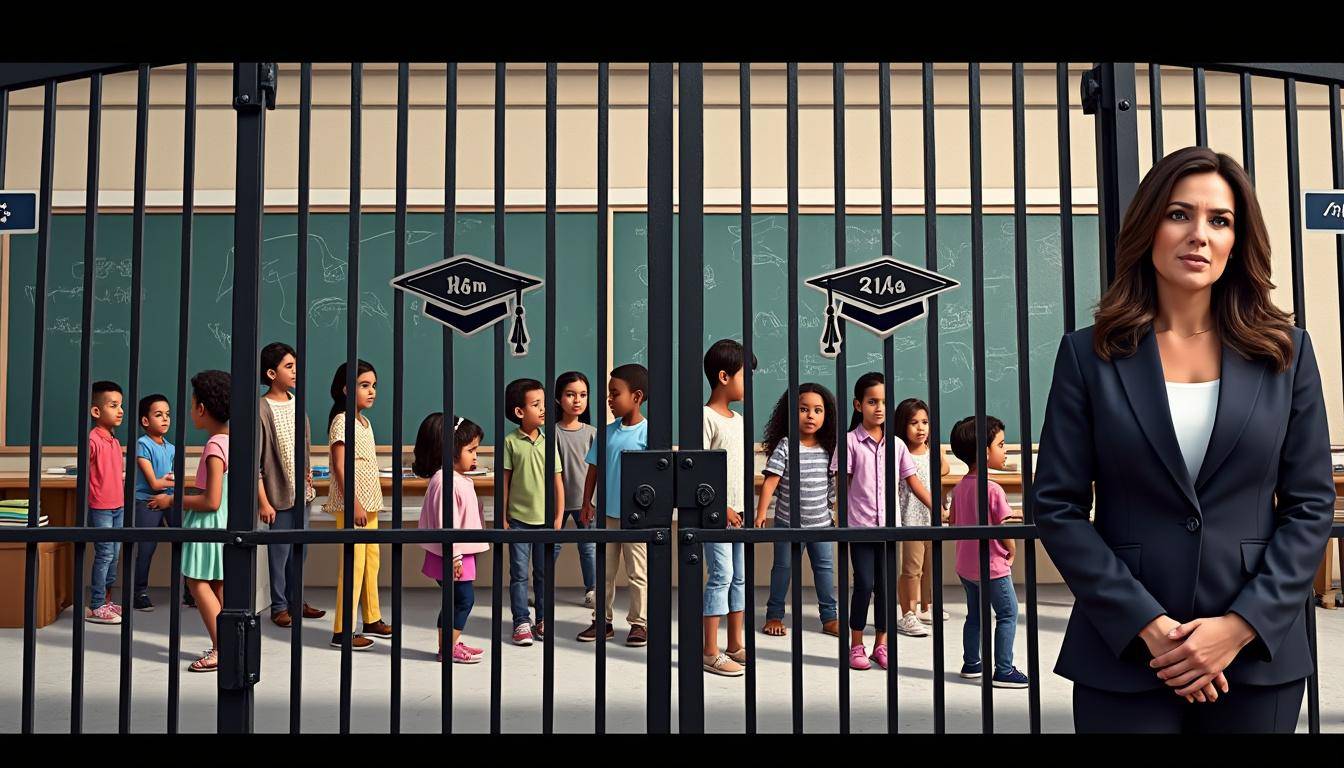
Michigan parents face a clear question today: will their governor support family choices in education or keep blocking new options tied to the federal Education Freedom Tax Credit linked to Trump era policy?
Whitmer, family choices and the Education Freedom Tax Credit
Michigan built a reputation on practical innovation, from the Model T to the modern auto industry. That same spirit now meets a new test in education, where Whitmer holds the power to expand family choices or keep current limits in place.
The Education Freedom Tax Credit, created under Trump as part of the Working Families Tax Cuts Act, offers a federal tax credit to people who donate to scholarship organizations. These groups help students pay for private school tuition, tutoring, disability support services, textbooks and after-school programs.
Supporters argue this policy reflects a respect for rights of parents to direct learning, while critics see it as a political tool. This tension sits at the heart of the current political opinion battle in Michigan.
How Whitmer is blocking education freedom in Michigan
The legislature has passed several education choice proposals, including resolutions urging the state to opt in to the Education Freedom Tax Credit. Governor Whitmer vetoed earlier school choice bills and now refuses to signal participation in the new federal program.
She described the credit as a vague “talking point” and claimed there is not enough information. In response, federal agencies released a detailed procedure and a joint fact sheet that explain exactly how states opt in, how scholarship organizations qualify, which students are eligible and how to ensure at least 90 percent of funds reach learners.
With a clear roadmap on the table, continued rejection looks less like caution and more like deliberate blocking of family choices. For many parents, that feels less like policy debate and more like lost opportunity.
Why education freedom matters for Michigan families
Across the country, parents tell a similar story. They feel trapped in systems where ZIP code and income limit their children’s options. In Michigan, this frustration grows when families see stagnant results in key subjects.
Recent results from The Nation’s Report Card show Michigan near the bottom third of states in 4th grade reading and in the middle of the pack for 8th grade math. Families ask why new tools like the Education Freedom Tax Credit stay unused while students struggle.
For a parent like “Angela” in Grand Rapids, whose son needs specialized reading support, education freedom means a chance to fund tutoring without pulling him from his public school. For “Marcus” in Detroit, it means a scholarship that helps his daughter attend a small school with strong STEM mentoring.
What the Education Freedom Tax Credit does and does not do
Public debate often blurs what this policy actually changes. Supporters highlight several key points that address common fears and frame the political opinion divide more clearly.
- No direct cut to public school budgets: The credit rewards private donations through federal tax relief. It does not reallocate state school funds or pull money out of district budgets.
- New money for education: The program adds private dollars to the learning system. Scholarships support tutoring, special education services and other resources, even for students who remain in public schools.
- Options beyond private tuition: Families use support for therapies, online courses, after-school programs and materials that public schools do not always provide.
- Strict rules for scholarship groups: To qualify, organizations must meet oversight standards and direct at least 90 percent of funds to students, not administration.
- Respect for state constitutional limits: Michigan’s constitution restricts vouchers. The tax credit structure sidesteps this by supporting donors and non-governmental scholarship groups instead of direct state payments.
When parents understand these details, many view the program less as an attack on public schools and more as an additional path to address individual needs.
Public support, political opposition and parents’ rights
Polling in 2023 showed nearly 70 percent of Michigan families support broader education choice. That figure includes many who still value their neighborhood schools but want flexibility when those schools fall short for a specific child.
This gap between public support and executive resistance fuels growing criticism of Whitmer. Parents argue their rights as primary decision-makers in education should outweigh partisan conflicts with Trump or broader national battles.
For a father like “Jason” in Lansing, the issue is simple. He pays taxes, volunteers at school and studies every policy change. When his governor blocks participation in a federal program that costs the state nothing and opens doors for his children, he sees it as politics placed above students.
Competition, school improvement and the role of the governor
Do more options harm public schools or push them to improve? Research across multiple states suggests districts facing modest competitive pressure often raise outcomes, especially when leaders respond with targeted support and innovation.
In Michigan, some charter schools already function as a form of choice. The Education Freedom Tax Credit would expand this by helping families access tutoring, therapies or alternative programs while still allowing them to remain enrolled in their district school.
Here the role of the governor becomes crucial. A leader who embraces education freedom signals trust in parents and confidence in schools’ ability to adapt. A leader who blocks it, as Whitmer does now, sends a different message about whose judgment counts most.
From partisan conflict to student-focused policy
The Education Freedom Tax Credit sits at the intersection of policy, politics and deeply personal family decisions. Supporters linked to Trump promote it as a flagship national initiative, while opponents frame it as a threat to traditional systems.
Yet for parents, the conversation sounds different. They talk about a child with dyslexia waiting for an evaluation, a teen bored in math who needs enrichment, or a student who thrives only in small group settings. These stories push beyond party labels and into daily life.
When Whitmer declines to opt in, she does not simply “challenge Trump.” She blocks new family choices and leaves existing inequities untouched. That political decision shapes the real options available in homes across the state.
What parents and communities do next
Parents who support education freedom have several practical steps. They organize local groups, speak at school board meetings and contact state lawmakers. Many sign open letters urging the governor to reconsider and share personal stories that cut through abstract debate.
Teachers and principals also enter the discussion. Some fear change, while others welcome any tool that brings more support to struggling students. Where educators and parents speak together, the conversation often shifts from party conflict to specific solutions.
In the end, every state makes a choice. Either leaders accept federal education freedom tools and trust families, or they reject them and hold to older models. Michigan now sits at that crossroads, with Whitmer’s decision defining the next chapter of its education story.