
How Arts Education Shapes Child Development: Cognitive Foundations and Classroom Evidence
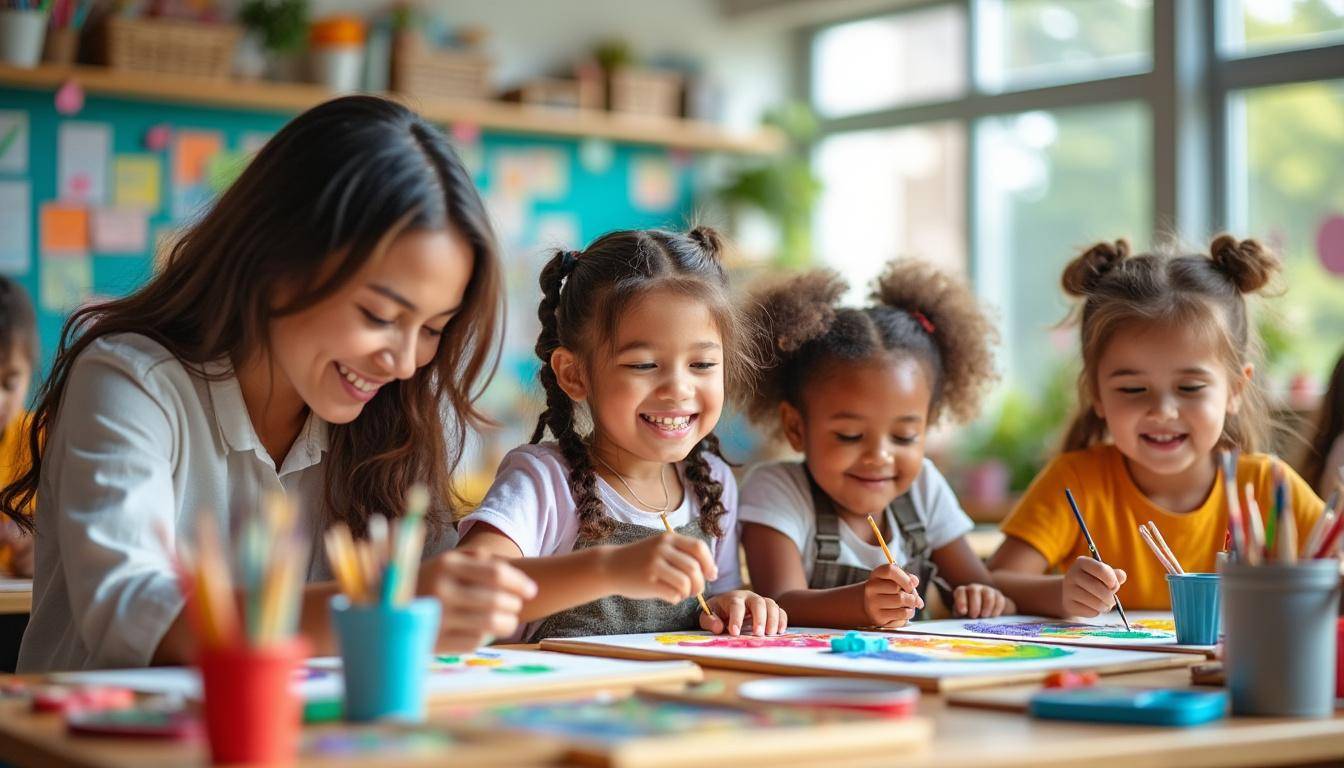
Ava, a primary teacher at a suburban school, noticed that students who participated in her weekly art sessions performed better on tasks requiring attention and memory. This observation reflects a broader pattern: when Arts Education is embedded in school curricula, children show measurable gains in Cognitive Skills such as memory, spatial reasoning, and attention control.
Research in recent years has linked consistent artistic practice—drawing, music, and sculpture—with improvements in working memory and information processing speed. For example, students who learn to read musical notation must retain sequences of symbols while translating them into motor actions. That simultaneous demand on memory and coordination strengthens neural pathways that support academic learning.
Mechanisms behind cognitive gains
At the neural level, creative activities recruit multiple brain networks at once. When a child composes a short song or sketches a scene, they must plan, monitor, and revise their output. Those processes are the same executive functions teachers rely on for classroom tasks. As a result, art becomes a natural training ground for improving Critical Thinking and complex problem management.
Consider how sculpting helps with spatial reasoning: a student estimating proportions must mentally rotate shapes, a skill directly transferable to geometry. Similarly, rhythm and meter in music enhance pattern recognition and sequencing—core elements of mathematics and coding.
- Cognitive Skills improved through arts: working memory, attention, pattern recognition.
- Cross-curricular transfer: art strengthens math and literacy readiness.
- Long-term outcomes: consistent exposure predicts better standardized performance in multiple subjects.
Anecdotal evidence from schools aligning arts with other subjects supports these claims. In one pilot program, teachers paired picture-story tasks with vocabulary lessons; students showed faster word retention and richer narrative construction. That pairing demonstrates the practical ways art can act as a scaffold for literacy development.
Policy debates sometimes dismiss art as extracurricular, yet evidence and classroom anecdotes suggest otherwise. The fictional school where Ava teaches introduced a short visual arts block and saw measurable improvements on class-wide attention assessments over a single term. That inexpensive change yielded outsized academic benefits.
For educators and policymakers seeking concrete steps, several practical strategies amplify the cognitive benefits of art lessons:
- Integrate art tasks with literacy and numeracy objectives.
- Rotate modalities—visual, musical, kinesthetic—to strengthen diverse neural pathways.
- Assess progress with both creative portfolios and traditional skills-based measures.
Those strategies help to position Arts Education as a central tool for improving Child Development and not merely an optional enrichment. For further examples of how mixed curricular approaches work in modern schools, see projects such as the Orion STEM Schools initiative, which blends creative practice with technical learning.
Key insight: When art lessons are deliberately linked to academic goals, they serve as powerful engines of cognitive growth rather than side activities.
Emotional Growth and Self-Expression: How Art Builds Resilience and Confidence
Ava observed that shy students often found their voice through clay and collage. That transformation is more than anecdotal: engaging in art reliably supports Emotional Growth and Confidence Building by offering children safe channels for exploring identity and feelings.
Art allows children to externalize their inner world without needing immediate verbalization. For many learners, especially those who struggle with language or behaviour regulation, non-verbal media like paint and movement act as therapeutic outlets. Over weeks, teachers notice lower incidence of classroom outbursts and improved peer interactions.
Specific emotional benefits observed in classrooms
First, art fosters emotional regulation. When a student sketches an upsetting scene and is guided through discussing choices in color and composition, they practice naming emotions and developing perspective. Second, successive creative successes—completing a project or sharing work publicly—build self-efficacy. That sense of mastery transfers to academic risk-taking and persistence.
Third, group art projects cultivate empathy. Collaborative murals or ensemble music-making require coordination and compromise. Children who have shared artistic goals tend to show increased prosocial behaviour. This dynamic is particularly relevant for inclusive classrooms where mixed-ability peers benefit from shared creative tasks.
- Emotional regulation through reflective art activities.
- Improved social bonds via collaborative creative projects.
- Enhanced self-esteem from public sharing and positive feedback loops.
Schools that prioritize mental wellbeing alongside academic metrics see fewer referrals for disciplinary action and greater overall engagement. Those concerned with child welfare will find resources and arguments in analyses such as the article on mental wellbeing for left-behind children, which highlights the role of creative practice in addressing isolation and trauma.
Practical classroom suggestions include structured reflection after creative sessions, celebratory displays that honor process, and short peer-review routines that cultivate supportive critique skills. These approaches blend arts and socio-emotional learning to create resilient learners.
In the story of Ava’s class, a formerly withdrawn pupil named Jamal began leading small art groups by term three, bolstering his confidence in both social and academic settings. That change underlines the broader principle: creative practice can be a gateway to sustained personal growth.
Key insight: Artistic engagement fosters emotional intelligence and resilience, equipping children with tools for lifelong well-being.
Creativity, Critical Thinking and Problem Solving: Real Classroom Strategies
Different art activities present unique problem-solving scenarios. When Ava assigns an open-ended sculpture project, students must make trade-offs between materials, structural stability, and aesthetic goals. These choices mirror the kinds of complex problems professionals face: identify constraints, prototype solutions, and iterate.
Schools that intentionally cultivate creative thinking teach students the habits of experimentation rather than the illusion of fixed answers. In project-based units, students hypothesize, test, fail, and revise—exactly the scientific method that underpins STEM learning. The interplay between arts and science is one reason hybrid programs like STEAM (Science, Technology, Engineering, Arts, Mathematics) have gained traction.
Concrete classroom activities that develop higher-order thinking
Design challenges—such as building a model bridge from recycled materials or composing a short multimedia story—require learners to manage time, resources, and roles. Teachers can scaffold these tasks by embedding reflective checkpoints and by asking open questions that prompt metacognition. The result is an increase in both Creativity and analytical reasoning.
- Open-ended design problems that require iterative testing.
- Critique sessions that emphasize evidence-based feedback.
- Cross-disciplinary projects that tie artistic choices to scientific principles.
For theatre-based problem solving—where role-play reveals perspectives—projects can explicitly connect to civic learning. Schools that partner with community arts organizations often broaden students’ horizons. A useful example is the work highlighted in the piece on children and theatre arts education, which documents how dramatic play fosters empathy and civic competence.
Technology can complement these approaches. Digital composition tools let students rapidly iterate, collect data on outcomes, and reflect on process. Yet success depends on thoughtful pedagogy: technology should extend artistic exploration rather than replace tactile learning.
In one case study, Ava introduced a monthly “design lab” where small teams addressed community issues through arts-based prototypes. Students developed communication plans, built models, and staged brief performances for local parents. The culmination of the project was a public showcase that demanded synthesis of learning across domains.
Key insight: When arts projects emphasize iteration and evidence-based critique, they become practical laboratories for strengthening Critical Thinking and Problem Solving.
Embedding a short video reflection after a unit helps students consolidate learning and share strategies with peers. This step supports metacognition and public speaking, reinforcing both creative and analytical habits.
Equity, Cultural Awareness and Access: Ensuring Arts Reach Every Child
Access to arts programming remains uneven across communities. In 2025, school funding decisions and staffing shortages continue to shape availability. Policies that shrink arts time in favor of tested subjects risk widening inequality, because arts engagement is tied to both academic and social opportunities.
One way to address this is to form community partnerships that bring arts professionals into schools. For example, civic arts organizations can co-design units that reflect local cultures and histories, expanding students’ sense of belonging. Such partnerships also counteract staffing constraints; when schools collaborate with community artists they can offer robust programming despite limited in-house resources.
Practical steps for improving equity
First, advocate for protected arts time in school schedules. Second, invest in teacher professional development that equips generalist teachers with basic arts facilitation skills. Third, prioritize funding models that support outreach programs in underserved neighborhoods. These steps reduce disparities and promote cultural inclusion.
- Protected arts time in timetables.
- Community partnerships to expand offerings.
- Targeted funding for underserved areas and inclusive programs.
Parental engagement plays a vital role too. Clear communication and culturally responsive outreach increase participation. Practical examples of engagement strategies are available in resources such as the article on supporting parents with language barriers and the piece describing how Greece’s parental empowerment initiatives strengthened school-home partnerships.
It’s also important to recognize policy constraints like data protection and consent that affect how schools share student work publicly. Where cross-border programs occur, awareness of regional regulations ensures ethical sharing of children’s creative output. This context highlights the need for transparent policies and family consent practices.
Finally, advocacy benefits from concrete storytelling. In Ava’s district, a mobile arts van visited neighbourhoods and offered afterschool sessions; attendance rose and teachers reported improved kindergarten readiness. Such initiatives demonstrate that with modest investments, arts can reach children who would otherwise be excluded.
Key insight: Equitable access to arts is achievable through partnerships, policy safeguards, and community-centered programming that together promote Cultural Awareness and inclusion.
Practical Guidance for Families, Educators and Communities to Promote Creativity and Lifelong Growth
Parents and educators can put theory into practice with realistic, low-cost strategies. Ava developed a simple home-school art checklist that encouraged fifteen minutes of creative play daily. The checklist included free activities like collage-making with recycled materials and short observation walks for drawing. Small, consistent practices reinforce habit formation and broaden creative confidence.
Communities can support these efforts by creating shared art kits, coordinating local exhibitions, and hosting family workshops. Schools can facilitate by offering take-home kits and how-to guides, ensuring families with limited time or resources can still participate. Such supports strengthen family bonds and underscore art’s role in everyday life.
Actionable recommendations for different stakeholders
- For families: schedule short daily creative moments and celebrate process over product.
- For teachers: integrate art into literacy and math lessons to maximize curricular alignment.
- For policymakers: fund inclusive arts staffing and community partnership funds.
Existing initiatives illustrate these approaches. Collaborative models like the one profiled at Ed Sheeran arts education projects highlight cross-sector funding and celebrity-led advocacy that raise public awareness. Other case studies—such as programs integrating early childhood arts into broader development planning—show measurable benefits for school readiness and social-emotional outcomes.
For students with additional needs, tailored plans make a difference. Look for guidance similar to the resources on SEND education and care plans, which show how individualized arts activities can support specific learning goals and build competency gradually.
Finally, communities should track outcomes beyond test scores. Measure engagement rates, student confidence, and social cohesion. Anecdotes from Ava’s program—parents describing quieter evenings at home because children used art to unwind—illustrate the broader societal value of arts investment.
Key insight: Practical, scalable actions by families, educators, and communities can embed Arts Education as a daily force for Confidence Building and lifelong learning.