

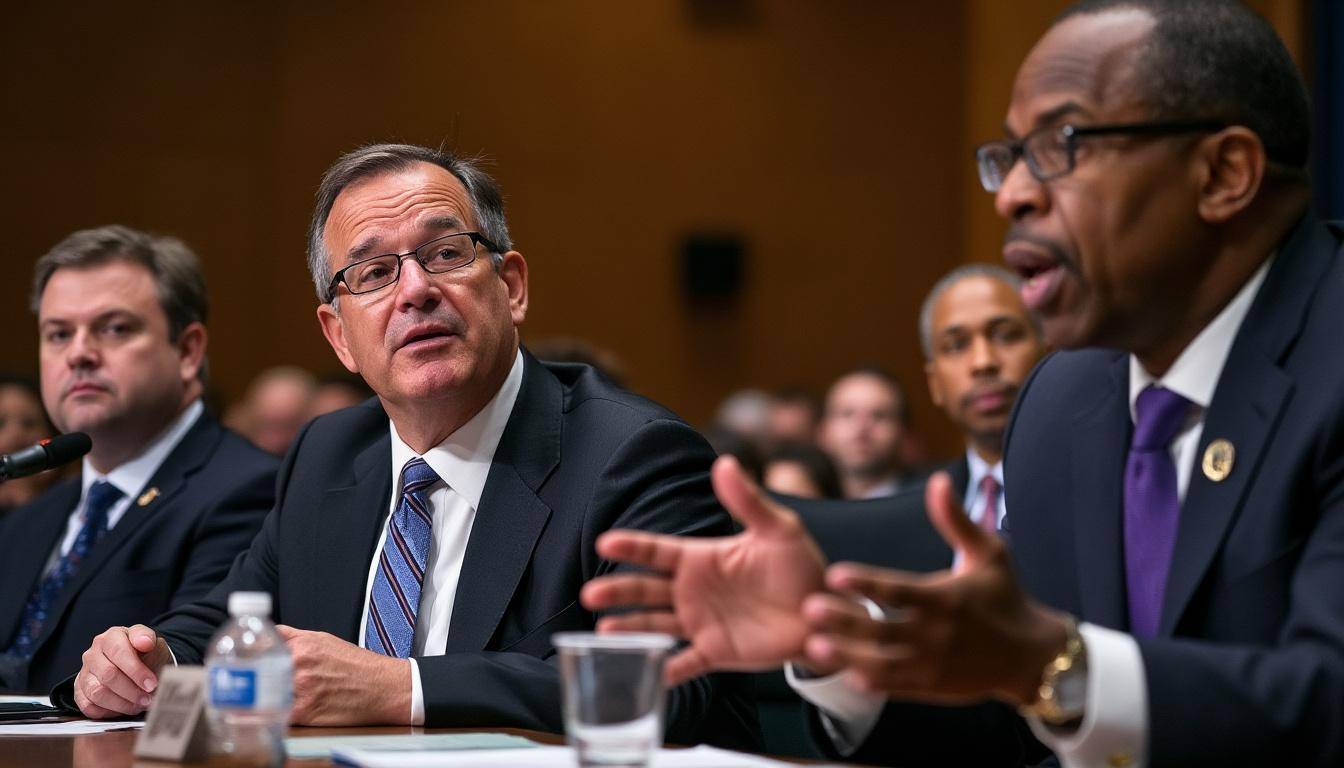
The hearing on Minnesota’s fraud scandal turned into a series of intense clashes between GOP lawmakers and Democratic leaders Tim Walz and Keith Ellison. These fiery debates showed how fast a policy review transforms into open political conflict when trust, money, and accountability are on the line.
Top 5 intense clashes between GOP lawmakers and Walz, Ellison
During the House Oversight session, Republican lawmakers focused on one central issue in their legislative battles with Walz and Ellison: who knew what about the fraud scheme, and when. Each exchange revealed gaps in communication, pressure on public institutions, and the emotional cost of high‑stakes hearings.
Wild clash 1: “You did not do your job” – GOP versus Walz on taxpayer money
The first major intense clash came when senior GOP lawmakers attacked Governor Walz over the state’s huge fraud case involving public funds. One Republican member repeated to Walz, “You did not do your job,” arguing he failed to protect taxpayer dollars and allowed large‑scale abuse to continue.
The lawmaker said both Walz and Ellison “allowed massive fraud” in Minnesota and stressed that citizens do not feel someone important will ever be personally held responsible. This type of fiery debate shows how political conflict often focuses less on procedure and more on personal accountability.
For a student like Emma following the hearing for a civics project, this moment turned abstract terms like “oversight” and “malfeasance” into something concrete. She saw how a governor is pressed when things go wrong in public programs that touch families and children.
Intense clashes over court orders, truth, and Feeding Our Future payments
The second highlight of the hearing showed how Republican and Democratic officials fight over facts as much as over values. At the center of this legislative battle was a debate about who ordered the restart of suspicious payments linked to the Feeding Our Future scandal.
Wild clash 2: Jim Jordan versus Walz on “hiding behind” a court order
Representative Jim Jordan created one of the sharpest intense clashes with Walz. He pressed the Democratic governor on why the state restarted reimbursements after the education department had already raised fraud concerns. Walz had publicly said a judge forced the restart.
Jordan cited a later court‑approved statement from the judge that seemed to contradict Walz’s account. Jordan pushed with a direct choice. Either the governor misled the public or the court did. He asked, “Which one is it?” and accused Walz of trying to “hide behind” a court order.
For learners, this moment shows how evidence, documents, and exact wording shape fiery debates. It turns into a lesson in critical reading. When two branches of government appear to tell different stories, you need to read the record, compare dates, and ask who benefits from each version.
Fiery debates on autism numbers and state priorities
The hearing did not stay limited to fraud mechanics. GOP lawmakers also used the session to question broader spending choices, including support for children with autism. Here, emotion mixed with data expectations, making the political conflict even sharper.
Wild clash 3: Nancy Mace grills Walz on autism care spending
Representative Nancy Mace pressed Walz on how much autism care spending had grown in Minnesota and how many children live in the state. She wanted specific figures for 2017 and 2024. Walz did not provide exact numbers on the spot, even after saying he had prepared for the hearing.
Mace responded that it was “unbelievable” he could not provide those details, adding “Thank God you are not vice president of the United States.” Walz fired back that he would not be a “prop” for her questions, which pushed the exchange from policy into personal tension.
For students like Emma, this intense clash is an example of how preparation matters in public life. When leaders speak about children with autism, families expect precision. If numbers are missing, trust suffers and bipartisan support for services becomes harder to build.
GOP lawmakers versus Ellison on leading the fraud investigation
While much of the attention focused on Walz, the hearing also placed Ellison, Minnesota’s attorney general, at the center of strong Republican criticism. These fiery debates highlighted how unclear roles between governor and attorney general feed political conflict.
Wild clash 4: Clay Higgins calls for Ellison’s resignation
Representative Clay Higgins confronted Ellison on whether he was “leading” the drive to expose and prosecute fraud related to the scandal. Higgins did not want to hear about Medicaid cases or side issues. He pushed for a clear yes or no on the specific criminal investigation around the massive fraud.
Ellison replied that his office was “following the law,” but Higgins cut him off. He said Ellison was not leading and urged, on the record, that the Minnesota attorney general should resign. For observers, this was one of the most dramatic intense clashes between GOP lawmakers and a Democratic official in the whole session.
A law student watching this exchange learns how difficult it is to explain legal process in a heated political space. When hearings reward short, emotional lines, careful descriptions of jurisdiction and procedure often lose ground to blunt accusations.
Impeachment talk and the peak of political conflict
The last key moment in these fiery debates pushed beyond criticism into direct threats to Walz’s political future. Here, the line between oversight and campaigning became thin, showing how legislative battles shape careers as well as policies.
Wild clash 5: Impeachment threats and accusations of malfeasance
Toward the end of the hearing, Representative Nick Langworthy argued that Walz should face impeachment for “malfeasance” under Minnesota’s constitution. He pointed to the scale of the fraud scandal and the governor’s decision not to seek re‑election, framing it as a direct result of his failures.
Walz remains in office, but the call for impeachment showed how far GOP lawmakers were ready to take this political conflict. For voters and families, this escalation turns a complex fraud case into a clear, high‑stakes narrative about trust and leadership.
For Emma and her classmates, this clash opened discussion on what impeachment means at the state level, how constitutions define “malfeasance,” and why checks and balances matter when large programs fail.
What students and parents learn from these intense clashes and fiery debates
These intense clashes between GOP lawmakers and Walz and Ellison offer more than political drama. For families, teachers, and students, they form a live case study on civic responsibility, critical thinking, and respectful disagreement.
Turning political conflict into learning: practical ideas
You can use these legislative battles at home or in class to build stronger civic skills. Instead of focusing on personalities, look at evidence, timelines, and how each side frames the story.
- Timeline analysis: Ask learners to map when Walz, Ellison, and agencies learned about fraud, and when they acted.
- Source comparison: Read a court document, a Republican statement, and a Democratic response. Identify agreements and conflicts.
- Role‑play hearing: Assign roles as GOP members, Democratic officials, journalists, and watchdog groups.
- Accountability debate: Discuss who holds ultimate responsibility in such a scandal and why.
- Media literacy task: Compare how different outlets describe the same fiery debates.
Used this way, today’s intense clashes between GOP lawmakers and Democratic leaders help young people move past noise and learn how serious oversight, reasoned disagreement, and active citizenship work in real life.