

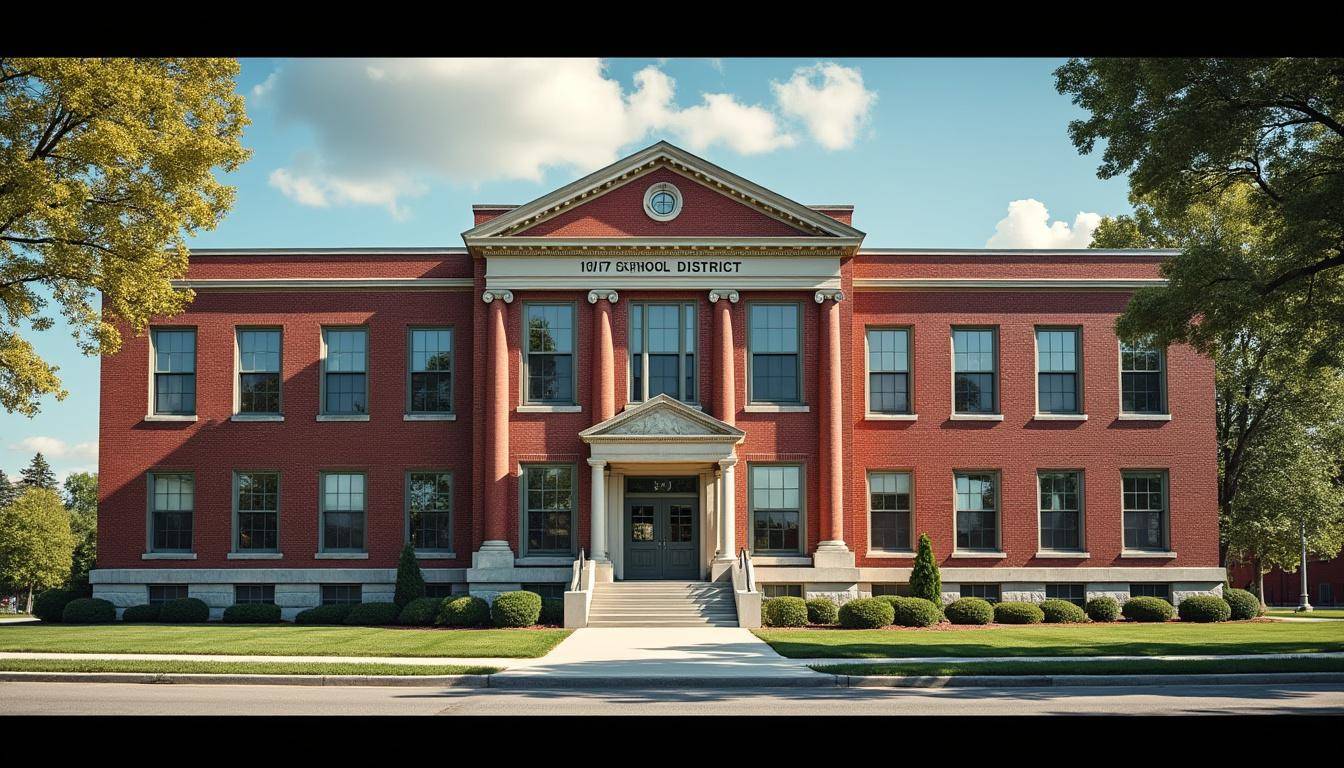
Everett School District Launches Its Inaugural Permanent School for Children with Disabilities on November 4, 1946 — Historical Overview of the School Launch
On November 4, 1946, the Everett School District marked a pivotal moment with the School Launch of its first Permanent School for Children with Disabilities. This event was not just an administrative milestone; it represented a shift in local attitudes toward public responsibility for disability services and early special education. Families who had previously relied on home visits and informal supports now had access to structured programs inside Everett High School in north Everett.
To bring these changes to life, follow the story of Anna Carter, a fictionalized parent-advocate whose young son, Tommy, displayed speech and motor delays following a childhood illness. Anna first encountered the district’s summer classes taught by Elizabeth Kempkes and others, and she returned the following year when the district opened its permanent program. Her experience illustrates how individual determination combined with institutional willingness to experiment can create lasting community services.
What the 1946 Opening Meant for Families
Families like Anna’s found several immediate benefits from the new program. Children received targeted instruction from educators such as Rachael Patterson and speech therapy from Vida Kent. The program also created an early model of shared resources when the nursery program and the special-education program began to co-locate.
- Access to trained staff and therapies previously unavailable to most families.
- A predictable schedule and safe learning environment for working parents.
- Community recognition that the public school system had a role in disability supports.
These outcomes were concrete and transformational for local families, but they also revealed early tensions: scarce funding, limited space, and the challenge of convincing a wider public of the value of inclusive services. Anna organized other parents to petition the school board in 1947 when federal funding expired, demonstrating a pattern that would repeat across decades: parents filling gaps through advocacy and local fundraising.
- Advocacy by parents pushed the district to remodel basements and reallocate rooms.
- Local fundraising supplemented state contributions to keep the program viable.
- Community partnerships with groups such as Easterseals bolstered therapy and equipment availability.
By situating the inaugural program within a broader story of postwar growth and civic resourcefulness, we can appreciate how the Inaugural launch set a template for later expansion. The district’s decision to purchase the nursery building and to accept a conditional transfer from the federal government reflected a pragmatic approach to building permanent infrastructure. These choices were made in an era when terminology, societal expectations, and funding mechanisms were all in flux.
Insight: The 1946 Permanent School opening combined parental advocacy, professional expertise, and municipal action to create a seedbed for the district’s evolving Special Education and Disability Services efforts.
Program Development and Early Growth: Building a Foundation for Inclusive Education in Everett
The first few years after the School Launch demonstrated how rapidly a small experimental program could expand when it met real needs. Within a year, the permanent classroom in Everett High School began sharing space with the district nursery program, and by the early 1950s, the program had diversified to include children with speech problems, hearing loss, cerebral palsy, and post-polio disabilities. These early years are instructive for understanding how practical choices shape long-term outcomes.
Lead educators and therapists—many trained through nascent national networks—applied new techniques and therapies. Physical therapist Arline Bovee and director Gerald V. Kincaid forged connections with national organizations to secure training and support. Anna Carter’s role evolved into that of a parent volunteer who coordinated rides and lobbied for space; her story illuminates how families and specialists worked in tandem.
Key Components of Program Development
- Specialized staff recruitment and training—teachers and therapists learned new methods and received specialized training through federal and nonprofit programs.
- Shared facilities—nursery and special-education programs economized on space, which required careful scheduling and coordination.
- Partnerships with nonprofits—organizations such as Easterseals provided both fundraising and technical resources.
Funding remained a persistent issue. The state’s decision in 1947 to provide 50 cents per six-hour day helped stabilize the nursery program temporarily, while local board actions—remodeling a basement, purchasing a lot valued at $8,000 for a fraction of that price, and negotiating terms with federal agencies—demonstrated creative fiscal problem-solving.
- Short-term state grants and modest per-day subsidies provided initial viability.
- Local remodeling projects reduced overhead but required parent and community labor.
- Emergency appeals to state representatives and school boards highlighted the precariousness of early programming.
Programmatic expansion also involved difficult language and public perceptions. Newspapers of the era used terminology that is outdated and offensive today; that historical context underscores why modern inclusive education emphasizes dignity and person-centered approaches. By 1950, the district counted more than 120 children needing services, a number that made the case for more formalized infrastructure and staffing budgets.
Examples from Anna’s volunteer work show how local actors solved logistical challenges: organizing carpools, fundraising for linoleum and large classroom windows, and convincing the administration to prioritize accessibility modifications. These small shifts cumulatively changed the experience of families and teachers.
Insight: Early program development in Everett hinged on trained personnel, innovative funding solutions, and community partnerships—elements that remain central to effective Inclusive Education today.
Expanding Services and Policy Context: From Postwar Needs to Statewide Special Education Networks
As the program matured through the 1950s and into the 1960s, Everett’s work became part of a broader statewide and national evolution in special education. Enrollment rose, new categories of need were recognized, and the district began offering services such as vocational training and home visiting. These additions illustrate how a local initiative can scale to meet changing demographic and policy realities.
During this period, Everett moved from ad hoc arrangements to more formalized supervision, as personnel like Martha S. Reilly and later Dr. Peter Zook and Norman Kincaid reorganized and professionalized services. The district’s experience mirrored national trends: the postwar baby boom increased demand for education, and federal funding in the 1960s targeted teacher training and program development for children with disabilities.
How Policy and Practice Interacted
- Federal training funds in the 1960s accelerated the professional development of special educators and therapists.
- Local consolidation of programs improved efficiency but required leadership capable of managing change.
- Community-based services, including home-visiting, extended support to families unable to reach centralized centers.
Case studies from Everett reveal pragmatic responses to overcrowding and building code issues. For example, when a proposed move to Baker Heights School was blocked, administrators used Garfield School instead, negotiating with parents to maintain program continuity. These decisions reflect both constraints and the district’s commitment to continuity of care.
- Vocational programs introduced in later decades connected students to postschool life.
- Collaborations with community colleges and employers helped create pathways beyond secondary school.
- Parent-teacher advocacy organizations provided crucial public visibility and fundraising capacity.
By 1960, the program served children from multiple districts and offered a range of services, from speech therapy to physical therapy and early vocational skills. The accumulation of experience and institutional knowledge positioned Everett to respond to later legislative changes, including federal commitments to expand civil rights and access for children with disabilities.
Insight: The intersection of local leadership, federal support, and community involvement during mid-century expansion laid the groundwork for modern Special Education frameworks and reinforced the importance of planning for transition to adult services.
Economic Pressures and Institutional Resilience: Navigating Crises from the 1980s to Program Relocation in 1998
The history of Everett’s special-education and nursery programs also includes periods of fiscal crisis that tested the durability of services. The early 1980s economic downturn and major local layoffs had direct impacts on enrollment and sustainability for the nursery and disability services. These pressures provide lessons for contemporary planners about risk, diversification, and community engagement.
When major employers reduced staff and local family incomes fell, enrollment dipped dramatically. The Everett Early Childhood Center’s enrollment fell from 76 to 22 children in a single year, creating operating deficits and prompting urgent appeals to recruit new full-time students or rationalize costs. These events forced the district to consider closures, fee increases, and alternate locations.
Responses to Financial Shortfalls
- Incremental fee adjustments and targeted recruitment efforts aimed to stabilize enrollment.
- Partnerships with faith-based organizations provided temporary relocation options when district buildings were decommissioned.
- Parent-led campaigns sought to make the financial case for sustained public investment in early childhood and disability services.
By 1998, the program moved from the long-used site at 5101 Woodlawn Avenue to a new host at Faith Lutheran Church. While relocation represented both loss and adaptability, it demonstrated a capacity to preserve core services despite changing circumstances. The building itself had borne witness to decades of incremental improvement, but the move also highlighted the need for secure, code-compliant facilities and long-term capital planning.
- Maintaining licensed capacity requires continuous investment in repair and compliance.
- Community coalitions can support capital campaigns and short-term bridging funds.
- Strategic partnerships with local nonprofits expand service reach during fiscal contractions.
Anna Carter’s later years in local advocacy illustrate how personal narratives fuel public support. Her testimony at school board meetings, fundraising drives, and volunteer coordination underscores the value of parent leadership in sustaining services when budgets tighten.
Insight: Financial crises revealed that institutional resilience depends on diversified funding, strong community partnerships, and advocacy that connects human stories to policy decisions.
Contemporary Lessons for 2025: Transition Services, Staffing, and Inclusive Education Strategies
Everett’s early work with a Permanent School for Children with Disabilities offers enduring lessons that are highly relevant in 2025. Current debates about workforce shortages, transition planning, and equitable access to early intervention echo mid-century themes, though the policy environment has evolved substantially. Practitioners and policymakers can draw on Everett’s history to design resilient, inclusive systems.
Key contemporary challenges include staffing shortages, sustainable funding for transition services, and ensuring that families from diverse backgrounds can access supports. Several recent resources and discussions spotlight these issues: analyses of how educators staff shortages impact classroom outcomes, resources on special education transition planning, and case studies of parent engagement in enrollment choices such as parents address school enrollment.
Actionable Strategies for Modern Inclusive Education
- Invest in training pipelines and apprenticeships to combat staff shortages, drawing on federal and nonprofit partnerships.
- Prioritize transition programs that connect school-based learning to vocational and postsecondary pathways.
- Use community partnerships to expand wraparound services, including childcare, therapy, and family supports.
Global examples also inform local practice. Reports on Ukraine children education and how nations adapt services in crisis reveal resilient models of mobilizing community resources and remote supports. Similarly, initiatives that empower parental leadership, as discussed in Greece empowers parents, show the value of equipping families with knowledge to advocate effectively. For Northern Ireland, concerns about students special needs ni crisis illustrate how systemic planning matters across contexts.
- Define clear metrics for success that include quality of life, not only academic benchmarks.
- Build contingency plans for enrollment shocks to avoid sudden closures and service loss.
- Leverage online and hybrid therapy models to broaden reach while respecting developmental needs.
Finally, community-focused educational innovations such as place-based learning and arts integration can reinforce inclusive environments. For example, local initiatives that bridge play, culture, and therapy—like community musical gardens and creative projects—strengthen social inclusion and developmental outcomes, echoing models found in broader community education work such as community-based learning programs.
Insight: The Everett story demonstrates that durable Inclusive Education depends on workforce investment, purposeful transition planning, and sustained community alliances that together enable children with disabilities to thrive.