

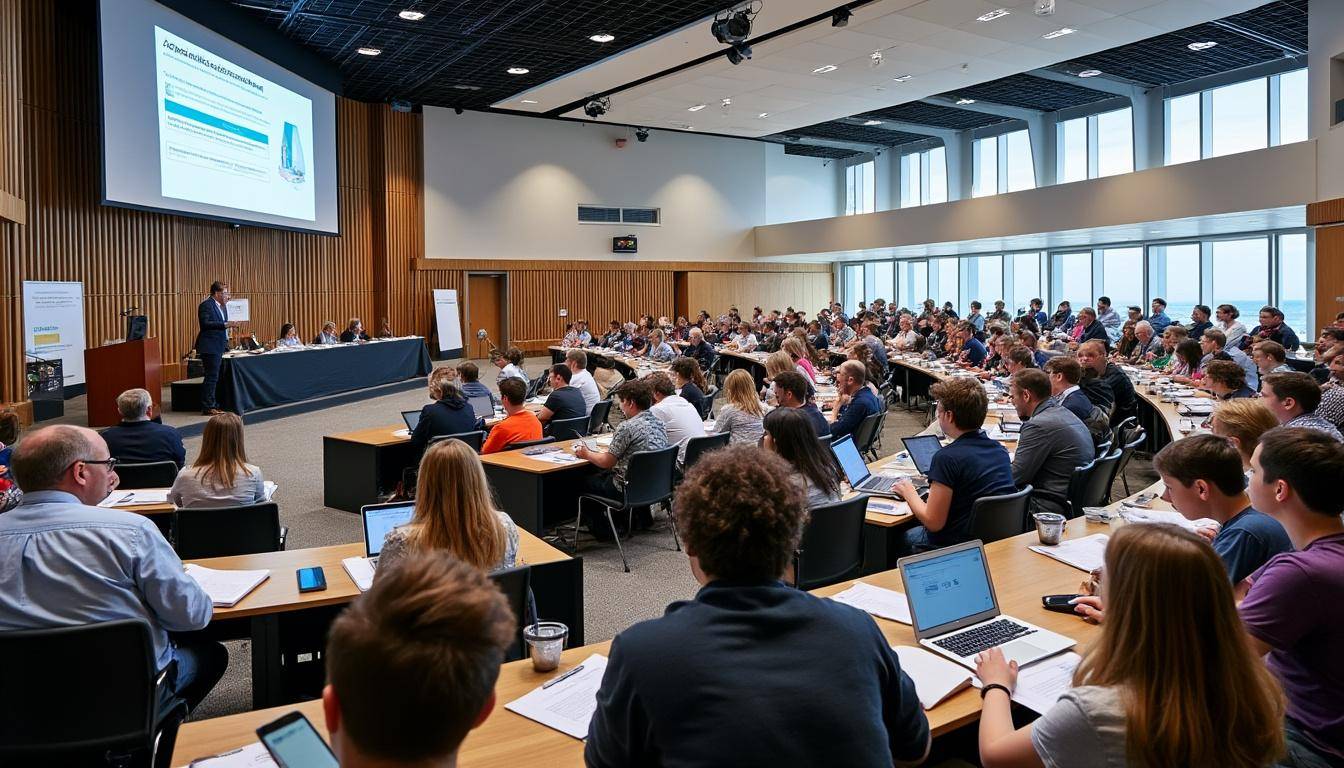
The upcoming Guernsey education event aims to bring teachers, leaders, and researchers together for a full day focused on stronger learning for every child. With an expected attendance of up to 250 participants, the conference will mix research, practice, and networking in a concrete and accessible way.
Guernsey education event: a conference focused on learning impact
The Guernsey education event will take place at Les Beaucamps High School and will function as a practical conference more than a formal ceremony. Sessions will target real classroom problems, from maths understanding to reading difficulties and the smart use of technology.
For many local educators, travelling to large mainland events is expensive and time consuming. This conference brings high quality learning and professional dialogue to their doorstep, similar in spirit to global efforts described in recent UNICEF education progress reports.
Attendance and participants at the Guernsey education conference
Organisers expect up to 250 participants, a significant attendance for a local education event. The audience will include classroom teachers, headteachers, support staff, and school governors, with some places reserved for trainee teachers and early career professionals.
This mix of participants will help connect decision makers with those who work daily with pupils. It mirrors broader trends where education policy, such as the debates around parent-driven education policies in Idaho, needs direct input from classroom experience to stay grounded.
For a young teacher like Sarah, who has taught in Guernsey primary schools for three years, the event offers rare direct access to researchers whose work she usually only reads online. This kind of close contact shortens the distance between research and real lessons.
Workshops and seminars: from maths to digital learning
The heart of the Guernsey education conference will be a series of practical workshops and seminars. Each session will link theory to classroom strategies, with clear examples teachers can try the next day.
Organisers want every participant to leave at least one workshop with a concrete strategy for maths or literacy, plus one idea related to leadership, teamwork, or pupil support.
Maths, literacy, and technology sessions at the education event
Several seminars and workshops will tackle core learning outcomes. For maths, speakers will explore how to strengthen conceptual understanding, not only procedural skills, using visual models and structured practice.
Literacy sessions will discuss strategies for vocabulary growth, reading fluency, and structured writing. These themes connect with health and wellbeing topics covered in other settings, such as the integrated approach to children’s needs in California children’s health and education programmes.
- Maths learning: focusing on reasoning, problem solving, and small-step progression.
- Literacy development: guided reading, explicit teaching of writing, and targeted intervention.
- Technology in education: digital platforms, assessment tools, and support for home learning.
Technology sessions will not only promote devices. They will also look at risks and critical thinking, echoing some of the concerns raised in analyses of the dangers of AI in education, such as over-reliance on tools or data privacy.
Leadership, teamwork, and pupil support at the Guernsey event
Beyond subject content, the Guernsey education event will devote time to leadership and school culture. Sessions will address how senior staff build coherent teams, handle change, and keep a focus on learning outcomes.
This holistic view reflects a wider shift seen across systems worldwide, where leadership training links academic goals with wellbeing and inclusion, similar to programmes discussed in articles on schools and public health threats.
Building strong teams and safe learning environments
One strand of the conference will look at how leaders foster trust and shared values inside staff teams. When teachers understand the same behaviour expectations and teaching principles, pupils experience a smoother day and feel safer.
Another strand will focus on safeguarding and emotional support for children. Internationally, sectors highlight mental health as a core part of learning, a perspective visible in reports on Caribbean children’s mental health, where schools act as early support hubs.
Through case studies from local schools, participants will see how consistent routines, clear communication with families, and well-trained support staff reduce stress for pupils. A stable environment then frees attention for genuine learning.
Research-informed teaching: what Guernsey educators gain
The event builds on the researchED model, which connects academic researchers with classroom teachers. In Guernsey, this education conference will offer sessions where speakers highlight evidence from studies and then show how it plays out period by period in real classrooms.
Nick Hynes, the island’s director of education, has described the event as a chance to access a wide range of ideas without leaving the island. This reflects a broader global interest in seeing education systems reduce gaps between research and practice, similar to debates seen in analyses of youth education in Gaza, where practical constraints test every policy.
From research to classroom: examples teachers will explore
Across the day, several themes will appear repeatedly. One is the idea of spaced practice and retrieval, where pupils recall knowledge at increasing intervals to make learning stick. Another is explicit instruction, where teachers guide practice step by step before moving to independent work.
Such evidence-informed methods are not theoretical trends. Teachers like Sarah see direct impact when they switch from unstructured group activities to clearer explanations, practice, and feedback loops. The conference structures workshops so educators test these ideas, discuss them with peers, and reflect on what fits their subject and age group.
By the end of the day, each participant should have a small action plan, whether it involves new questioning routines, updated lesson planning, or fresh assessment examples. The aim is simple: better daily lessons for pupils across Guernsey schools.
Networking and collaboration at the Guernsey education event
Alongside formal seminars and workshops, the Guernsey education event will include generous time for networking. Informal conversations often lead to the most practical solutions, as teachers compare notes on similar challenges.
Short structured networking slots will group participants by phase or interest, such as early years, secondary maths, or inclusion. This approach reflects how other large education gatherings, like those focused on health education such as health education programmes in Louisville, build bridges between professionals who rarely meet face to face.
Ongoing collaboration after the conference
Organisers do not want the energy to end when the doors close. Discussion groups and online forums will help teachers share what they try back in school, including both successes and difficulties.
For example, a group of Guernsey maths teachers might decide to meet once per term to share retrieval practice quizzes and discuss exam performance. Another group may focus on early reading, pooling decodable text resources and intervention plans.
Through this structure, the attendance of up to 250 people becomes more than a one-day event. It turns into a network that supports continuous professional growth and better outcomes for children in Guernsey.